
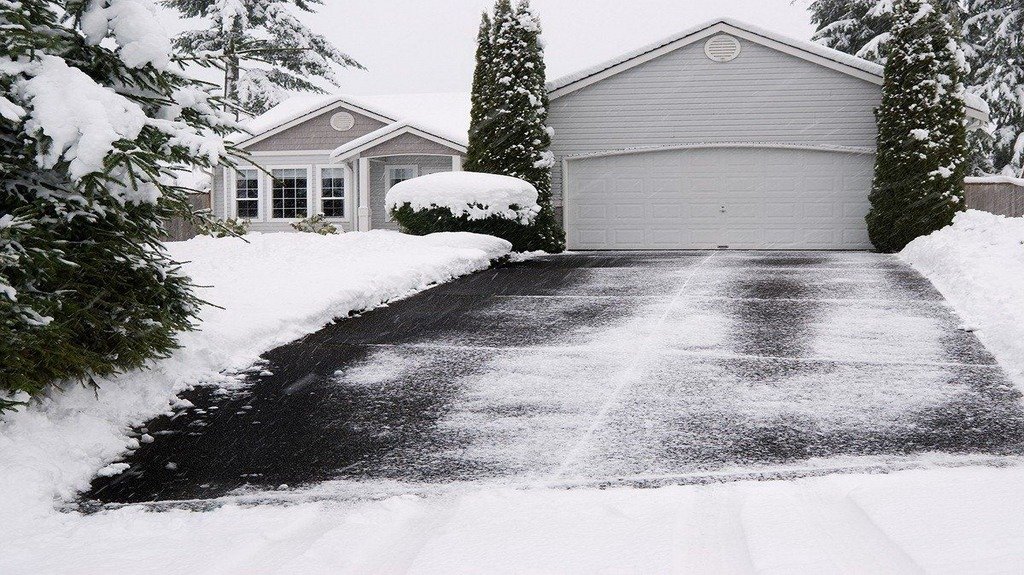
For most driveways, clear the snow first and apply a small amount of suitable de-icer only where ice remains. Salting before a storm can also help prevent ice from bonding to pavement, but only when the forecast, surface temperature and product make pre-treatment worthwhile. In Fredericton, wet snow, freezing rain and overnight refreezing mean the right timing can change from one storm to the next.
The goal is not to cover your entire driveway in salt. It is to keep the areas you use accessible while avoiding unnecessary salt around your lawn, pets and landscaping. Here is how to decide when to salt, when to shovel or plow, and when sand is a better option.
Before or after snow: The quick answer
There is no single salting schedule for every Fredericton winter storm. Use the expected precipitation, pavement conditions and temperature to choose the next step.
| Driveway conditions | Better approach | Why it works |
|---|---|---|
| Light snow or freezing precipitation expected, with suitable temperatures | Consider a light pre-treatment on priority paved areas | May reduce the bond between fresh ice and pavement, making later clearing easier |
| Heavy snow is forecast | Plan to shovel, snow blow or plow; treat remaining ice afterwards | Salt is not a substitute for removing a thick layer of snow |
| Snow has stopped and the driveway has been cleared | Apply de-icer to stubborn icy patches, if suitable | Treatment can reach the thin ice layer instead of being buried under snow |
| Wet snow or rain is expected to freeze overnight | Clear slush, remove standing water where practical and treat at-risk patches | Limits the water that could form slippery ice later |
| Pavement is around −10°C or colder | Prioritize removal and consider sand or grit for traction | Ordinary rock salt becomes much less effective in severe cold |
| Rain is likely to wash the surface before freezing | Hold off on early salting and reassess as conditions change | Rain can dilute or carry away the material before it helps |
| Driveway is dry with no ice expected | Do not salt simply because it is cold | Salt serves no useful purpose on a dry, hazard-free surface |
These are starting points, not fixed rules. The product label, condition of your driveway and actual pavement temperature still matter. Never assume a treated surface is safe to walk or drive on without checking it.
Why does the timing of driveway salting matter?
Salt helps manage ice by lowering the freezing point of water. As it dissolves into moisture on the pavement, it forms a salty solution that can weaken or melt ice. The process needs suitable conditions and time; it is not an instant replacement for a shovel or snowplow.
Two different tasks are often called salting, but they happen at different stages of a storm.
Anti-icing: Treatment before ice bonds to the surface
Anti-icing means applying a compatible treatment before expected ice forms or bonds firmly to the pavement. On appropriate paved surfaces, light pre-treatment may make it easier to remove the next layer of snow or ice. Some professional operations use liquid treatments, while homeowners may have granular products approved for preventive use.
This approach is most useful when the forecast is reasonably clear and the product can remain on the surface. Heavy rain may wash it away. Deep snow may cover it and still require plowing. If the pavement is already too cold for the material to work effectively, spreading extra salt will not solve the problem.
De-icing: Treatment after snow or ice is present
De-icing means treating ice that has already formed. For a typical residential driveway, this usually comes after the loose snow has been cleared. A modest amount of suitable material can then act on remaining bonded ice, especially in tire tracks, shaded patches and the walking route to your door.
That distinction is important: anti-icing tries to reduce the bond before it develops; de-icing helps loosen or melt an existing layer. Neither method guarantees an ice-free driveway through a changing Fredericton winter day.
Should you put salt down before it snows?
Sometimes, yes—but do not automatically pre-salt before every snowfall. A light application can be useful before certain freezing events when the driveway is clear, the treatment suits the paving material and conditions are warm enough for it to function.
Pre-salting may be worth considering when:
- Freezing rain, freezing drizzle or a light icy mix is forecast and you can treat before the surface becomes slick.
- A previously cleared driveway is expected to develop a thin bonded layer that would otherwise be difficult to scrape.
- The surface is suitable for the product, and rain is not expected to wash it off before the freezing event.
- You can apply the product at the label’s recommended rate instead of creating scattered piles.
Avoid treating well ahead of uncertain weather. Dry granular salt can scatter or be tracked away, and warm rain can carry dissolved salt into the soil and drains. Pre-treatment is a targeted decision, not permission to apply more material than necessary.
What about freezing rain?
Freezing rain creates a different problem from ordinary powdery snow. Water freezes on contact with a cold surface, sometimes building a smooth layer faster than a homeowner can remove it. A suitable anti-icing treatment may help reduce bonding if applied under the right conditions, but prolonged or heavy freezing rain can overwhelm it.
Keep steps, entrance paths and slopes in mind. Avoid unnecessary trips outside during dangerous conditions, and do not assume a driveway is safe just because it was treated earlier. If the storm continues, the surface may need another assessment rather than an automatic second dose of salt.
When pre-salting is unlikely to help
Pre-salting is less useful when heavy rain will arrive first, a deep snowfall is expected to need repeated mechanical clearing, or the pavement is far below the product’s practical working range. It is also a poor idea to put an incompatible de-icer onto vulnerable paving material simply to be ready for the next storm.
A clearer driveway before snowfall is helpful. A thick white layer of rock salt is not a sign of better protection.
When should you salt after shovelling or plowing?
After snow clearing is the best starting point for most homeowner ice-control jobs. Removing the loose accumulation lets the treatment reach the slippery material that remains bonded to the surface. It also means you generally need less product.
Follow this practical sequence:
- Clear early when conditions are safe. Remove snow before tyres and foot traffic press it into hardpack. During a long storm, more than one clearing pass may be useful.
- Move snow away from drainage routes. Avoid piling it where daytime melting will run across the driveway or a walkway and freeze again overnight.
- Check the surface. Look for glazed ice, compacted tire tracks, wet shaded sections, slopes and the route between parking and the front door.
- Treat only where needed. Apply an appropriate de-icer lightly and evenly to the remaining icy areas, following the product’s label and temperature guidance.
- Allow it time to work. Melting is not immediate. Once the ice loosens, carefully remove slush so it does not refreeze.
- Recheck the driveway later. Falling temperatures, new precipitation or runoff from a snowbank can create fresh hazards even after a successful clearing.
Do not repeatedly spread more salt just because the first application has not produced an immediate result. Assess whether it needs more time, whether the temperature is too low, or whether physical removal or traction grit is the more practical option.
For larger accumulations, residential snow plowing and blowing can address the snow before any necessary ice treatment. Steps, ramps and entrances may need more careful manual snow shovelling.
What temperature is too cold for driveway salt?
Ordinary rock salt becomes much less practical as pavement temperatures fall below about −10°C. It often works more slowly as the surface gets colder, and below that range relying on it alone can waste material without providing the access you need.
Pavement temperature is not always the same as the air temperature reported in the forecast. An exposed driveway may warm in sunshine, while a shaded section near a garage may stay colder. The moisture present, amount of ice, product formulation and available time also affect results.
Different ice-melting products have different practical temperature ranges. Do not assume that a product advertised for lower temperatures is automatically suitable for your driveway, lawn or pets. Read its ingredients, surface restrictions and directions before use.
When sand is more useful than salt
Sand or traction grit is useful when the main immediate need is grip and melting is too slow or unlikely. It does not melt ice, but it can give tyres and footwear additional traction when placed on top of a slippery surface.
| Material | Main purpose | Best use | Important limitation |
|---|---|---|---|
| Rock salt | Help melt or loosen snow and ice | Suitable paved areas when pavement temperatures allow effective melting | Much less effective in deep cold; excess runoff affects soil and vegetation |
| Other labelled ice melters | Melt ice according to the specific formulation | Situations where the product is approved for the surface and conditions | Performance and environmental effects vary; read the label |
| Sand or traction grit | Improve grip rather than melt ice | Very cold conditions and slick surfaces needing immediate traction | May be displaced by traffic; clean it up after the thaw |
A mixture may sometimes provide both melting action and traction, but the right combination depends on the conditions. On surfaces where salt is unsuitable, traction material and careful mechanical clearing may be the better choice.
How much salt should you use on a driveway?
Use the smallest amount that gives an appropriate result, following the product’s application instructions. There is no reliable single scoop or handful measurement for every driveway. The required quantity depends on the treated area, ice thickness, pavement temperature and the material itself.
For a homeowner, these habits make a difference:
- Clear as much snow as practical before applying anything.
- Spread material in a thin, reasonably even pattern where ice remains; do not leave mounds of crystals.
- Focus on walking routes and difficult patches rather than coating the whole driveway by default.
- Wait for the treatment to work, then remove loosened slush and assess whether another application is genuinely needed.
- Sweep up unused crystals or grit when conditions allow, keeping them out of lawn areas and drains.
- Store de-icers in a sealed, dry container away from children and animals.
More salt is not always more effective. Excess material can be carried into nearby grass, trees, stormwater and groundwater when the snow melts. Using less, but at the correct stage of the storm, is usually a more sensible approach.
Does driveway material change your salting decision?
Yes. A product suitable for one driveway surface may not be appropriate for another. Before applying any ice-melting chemical, consider the surface’s age, condition and manufacturer’s recommendations.
Asphalt driveways
Asphalt driveways can often be cleared mechanically and treated with suitable de-icing materials when required. However, damaged edges, cracks, low spots and drainage problems can still cause icy patches. Salting cannot repair poor grading, and a large amount of melted snow that runs across a shaded area may freeze again.
Concrete driveways and paths
Concrete needs extra attention, particularly when it is new or already scaling and cracking. Some de-icers can contribute to surface deterioration under repeated freeze-thaw exposure. If you have newly poured concrete, follow the installer or concrete supplier’s guidance; avoiding chemical de-icers during the first winter is often recommended. Sand may provide traction without relying on an incompatible chemical treatment.
Interlocking pavers and natural stone
Interlocking paving stones, joints and decorative stone finishes can respond differently to salt. Check what the paver or stone manufacturer allows. Avoid aggressive scraping that may catch raised edges, and address uneven stones or drainage issues before winter conditions make them harder to see.
Gravel driveways
Gravel needs a different approach because loose material can be pushed aside during clearing. Surface grit may provide limited benefit depending on the existing aggregate and ice conditions, while chemical runoff and drainage still deserve attention. The first priority is generally controlled snow removal and maintaining a stable driving surface.
How can you prevent ice without over-salting your driveway?
The best ice-control plan begins with managing snow and water, not with buying extra bags of salt.
Watch where meltwater travels. Snow piles beside a driveway may melt in the sun and send water across a shaded entrance. That water can turn into ice after sunset. If a downspout empties over the driveway, look for a suitable way to redirect it before winter conditions arrive.
Clear snow before it becomes compacted. Vehicle tyres and foot traffic press snow into the surface, making later removal harder. Plan snow blowing, plowing or shovelling around the expected accumulation rather than waiting for every layer to become hardpack.
Pay attention to shaded and sloped areas. These can remain icy after exposed sections have thawed. A garage approach, front steps and the route to the mailbox may need different attention from the flat centre of the driveway.
Keep access routes visible. Mark vulnerable edges, obstacles and landscape borders before significant snowfall. This helps snow-clearing equipment work around the property without catching features hidden by snow.
Review the surface after a thaw. Rain, afternoon sun and shifting snowbanks can create new refreezing risks. An area that was clear in the morning may not be safe that evening.
For a residential property, this might mean shovelling a light snowfall promptly, treating a small icy patch near the entrance, and leaving the dry sections unsalted. For a larger site, the same principle becomes a coordinated plan for plowing, walkways, drainage and targeted salting.
What about lawns, pets and winter runoff?
De-icing chemicals help with winter access, but they do not stay neatly on pavement. Meltwater and slush can carry them toward lawns, flower beds and nearby soil. Repeated exposure can damage grass and some plants, particularly where salty snow is piled in the same location all season.
Keep application away from grass where possible, choose snow-storage areas carefully, and avoid pushing treated slush into landscaping. If you notice thin or brown strips along the driveway in spring, investigate the cause rather than assuming that additional lawn fertilizer will solve it.
Animals are another reason to use products carefully. Ice-melt crystals and residue can irritate paws, and swallowing de-icer may cause harm. A label using words such as pet-friendly does not mean a product is harmless in every situation. Keep pets away during application, follow all label warnings, and clean their paws after exposure. Seek veterinary advice promptly if a pet swallows a concerning amount.
For both homes and businesses, keeping a simple record of conditions and treatments can help you see whether repeated ice is coming from a drainage problem, snow placement or changes in the weather.
Common salting mistakes to avoid
Even a suitable ice melt can disappoint if the timing is wrong. The most common avoidable mistakes are:
- Salting a deep blanket of snow instead of removing it. This uses more material and leaves packed snow underneath.
- Pre-salting before rain. The material may be diluted or washed away before freezing starts.
- Expecting ordinary salt to work quickly in extreme cold. Pavement temperature can make melting slow or impractical.
- Adding more salt without checking the result. A second application may not solve a problem caused by cold, standing water or poor drainage.
- Ignoring the surface material. New concrete and certain pavers require particular care.
- Piling salty snow beside a lawn or entrance. Meltwater can damage plants or refreeze across a walking route.
- Assuming any treated driveway is safe. Icy patches can remain or return, especially on shaded slopes.
The safer habit is to check the condition, clear what you can, treat the actual hazard and reassess as the weather changes.
Need help with snow clearing and ice control in Fredericton?
An effective winter plan combines timely snow removal with ice treatment suited to the weather and your property. Some storms call for plowing first; others justify limited anti-icing before freezing begins. Walkways, sloped driveways and parking areas may all need different attention.
Atlantic Lawn & Snow provides residential snow plowing and blowing, manual shovelling, sanding, salting and de-icing in Fredericton and surrounding communities. If you would rather have a structured winter-maintenance plan than decide how to handle every storm on your own, explore our salting and de-icing services or contact our team for an estimate. Commercial property managers can also review our commercial snow removal services.
The bottom line: Shovel or plow away the snow first in most situations, then treat remaining ice where needed. Consider pre-salting only when the weather and surface make it useful. In very cold conditions, traction grit and timely clearing may be more effective than simply applying more salt.
FAQs about salting driveways in Fredericton
Is it better to salt before snow or after shovelling?
For most residential driveways, clear the accumulated snow first, then use a suitable de-icer on remaining ice where necessary. Before a suitable freezing event, a light pre-treatment may help prevent bonding. The timing depends on the forecast, pavement temperature and product instructions.
How long before a snowstorm should I salt the driveway?
There is no universal number of hours. Use the product’s directions and a reliable short-term forecast. Applying granular salt too early can allow it to scatter or wash away. Pre-treatment should have a specific purpose rather than being a routine step before every storm.
Should I salt before freezing rain?
A suitable preventive treatment may help limit bonding if applied before freezing begins and if it can remain on the surface. Heavy rain before the freeze may wash it away, while continued freezing rain can create new ice after treatment. Use caution and check conditions again once it is safe.
Can I use sand instead of salt?
Yes, when traction is the priority or conditions are too cold for practical melting. Sand or grit improves grip while it stays on the ice, but it does not melt the surface. Sweep up leftover material after the thaw to reduce tracking and blocked drainage.
Can road salt damage a concrete driveway?
It can contribute to deterioration, especially on new or vulnerable concrete exposed to freeze-thaw cycles. Check with the installer or material supplier and read the product label. For recently poured concrete, traction sand may be preferable to chemical de-icers.
Will salting the driveway prevent black ice all night?
No. A de-icer cannot guarantee an ice-free surface. New runoff, falling pavement temperatures, further precipitation and untreated patches can all produce slippery conditions. Recheck walking and driving areas after a thaw or overnight temperature drop.
Do I still need snow removal if my driveway has been pre-salted?
Yes. Pre-salting is intended to help manage bonding, not to remove accumulation. You will still need to shovel, snow blow or plow when enough snow falls. The work is often easier before tyres and feet compress fresh snow.