
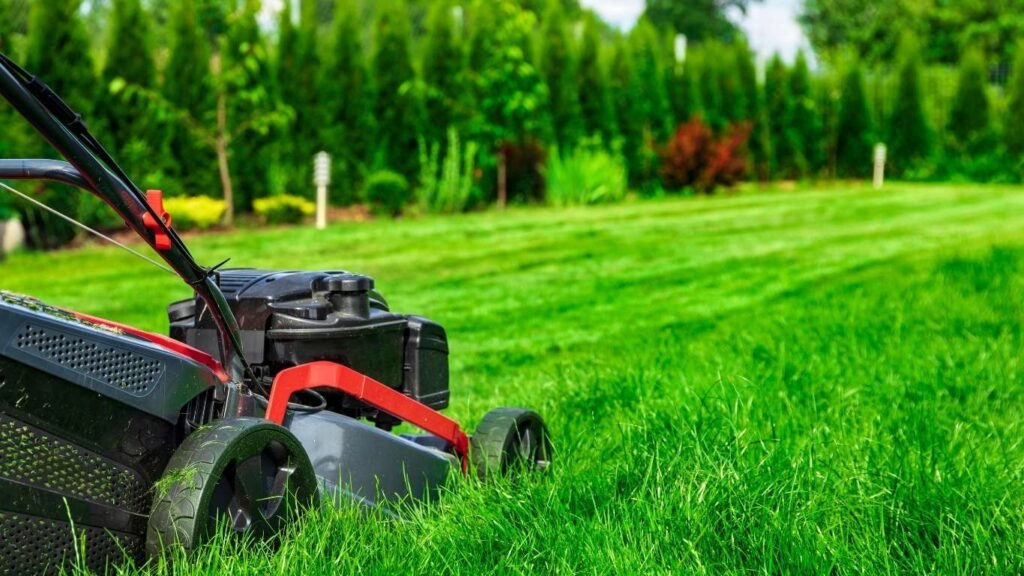
Your neighbour’s lawn looks like a golf course fairway, perfectly striped, lush green, and thick enough to walk barefoot without feeling a single weed. Meanwhile, your own grass seems thin, patchy, and constantly battling dandelions despite your best efforts. The difference might not be what you’re doing to your lawn, but rather what you’re doing to it every time you fire up the mower.
Here’s the truth most Fredericton homeowners don’t realize: cutting your grass shorter doesn’t make it neater or easier to maintain. In fact, it’s probably the single biggest mistake you’re making. In New Brunswick’s challenging climate, where clay-heavy soil, humid summers, and brutal freeze-thaw cycles test every blade of grass, your mowing height isn’t just about aesthetics. It’s your lawn’s first line of defence against weeds, pests, disease, and the environmental stress that comes with living in Atlantic Canada.
The science is clear: proper mowing height determines whether your grass develops deep, resilient roots or struggles week after week to recover from each cut. It decides whether weeds find a foothold or get crowded out by thick turf. And for new residents unfamiliar with our region’s specific soil conditions, or busy property managers juggling multiple responsibilities, understanding these fundamentals can mean the difference between a lawn that thrives and one that merely survives.
In this guide, you’ll discover the exact mowing heights for each grass species common to our region, how to adjust your cutting strategy through New Brunswick’s distinct seasons, and why the “one-third rule” matters more than any fertilizer you’ll ever apply. Backed by Atlantic Lawn & Snow’s 15+ years of hands-on experience maintaining Fredericton properties through every weather extreme, this isn’t generic lawn advice, it’s a practical roadmap built specifically for the challenges you face right here in New Brunswick.
Cool-season grasses in New Brunswick
Walk across any residential lawn in Fredericton, and you’re stepping on cool-season grass varieties. These aren’t random species, they’re the only types that can genuinely thrive in our climate. While homeowners in warmer regions enjoy Bermuda grass or Zoysia, those varieties would never survive a single New Brunswick winter. Our lawns are built around grasses that evolved to handle cold, and that biological reality shapes everything about how we care for them.
Cool-season grasses dominate Atlantic Canada for one simple reason: they’re winter-hardy, and ecological lawn research confirms that turfgrass species selection is one of the most significant factors in long-term lawn sustainability. They enter dormancy when temperatures drop below 10°C, protecting their crown and root systems under snow cover, then explode back to life each spring. Their optimal growing temperature sits between 15°C and 24°C, exactly what we experience during May and September. This is when your lawn grows aggressively, requiring frequent mowing and careful height management.
The primary species you’ll find in local lawns include:
- Kentucky bluegrass – prized for its rich colour and ability to spread via underground rhizomes that naturally fill in bare spots
- Canadian bluegrass – slightly tougher, handling drought and poor soil better than its Kentucky cousin
- Perennial ryegrass – germinates quickly and tolerates foot traffic exceptionally well, making it ideal for play areas
- Tall fescue and red fescue – offering superior shade tolerance for properties with mature trees
Understanding your grass type matters because each species has different leaf surface requirements. Kentucky bluegrass needs more height to support its spreading growth habit, while perennial ryegrass can handle a slightly lower cut due to its bunching nature. When temperatures climb above 30°C during July heat waves, these cool-season varieties often enter summer dormancy, turning brown to protect themselves. This isn’t death; it’s survival. Taller grass protects the crown during this stress period, allowing faster recovery when temperatures moderate.
At Atlantic Lawn & Snow, we use quality seed blends specifically formulated for New Brunswick conditions. Our aeration and overseeding services introduce the right mix of species to match your property’s sun exposure, soil type, and intended use. Because when you’re working with the right grass varieties maintained at proper heights, your lawn becomes naturally resilient rather than constantly fighting against its environment.
Recommended mowing heights by grass species
If you’re cutting all your grass to the same height regardless of what’s growing, you’re working against biology , consult a grass cutting height chart to understand the ideal range for each species. Each species has evolved specific leaf surface requirements to maintain photosynthesis and support its root system. Cut below these thresholds, and you’re not just trimming, you’re starving the plant.
Tall fescue requires the most generous height: 10 to 15 cm (4 to 6 inches). This isn’t excessive, it’s necessary. Tall fescue develops the deepest root system of any cool-season grass, often reaching 60 cm or more into the soil. That root mass requires substantial leaf surface to produce enough energy. When you see a lawn with tall fescue cut to 5 cm, you’re looking at a plant desperately trying to regrow its food factory while its roots slowly starve.
Kentucky bluegrass performs best between 7.5 and 10 cm (3 to 4 inches). This is the sweet spot for encouraging its rhizome spread while maintaining enough leaf surface for vigorous growth. Kentucky bluegrass is the foundation of most premium lawn blends in Fredericton, and keeping it at the higher end of this range, especially during summer stress, produces that thick, carpet-like turf everyone wants.
Canadian bluegrass tolerates slightly lower heights: 6 to 9 cm (2.5 to 3.5 inches). Its natural drought tolerance comes from a more efficient leaf structure, but that doesn’t mean you should push it to the minimum. During dry periods, keeping Canadian bluegrass closer to 9 cm helps it maintain moisture and stay green longer.
Red fescue shares the same range as Canadian bluegrass: 6 to 9 cm (2.5 to 3.5 inches). Red fescue is your shade specialist, often planted under trees where other grasses struggle. In these low-light conditions, maintaining adequate height becomes even more critical, the grass needs every bit of leaf surface to capture limited sunlight.
Perennial ryegrass handles the lowest cut: 4 to 6 cm (1.5 to 2.5 inches). Its rapid growth and wear tolerance make it popular for high-traffic areas, but even ryegrass suffers when scalped. The 6 cm mark should be your summer target, dropping to 4 cm only during peak spring growth when the plant can recover quickly.
Here’s what happens when you cut below these recommendations: the grass blade is the plant’s solar panel. Remove too much of it, and the plant can’t produce enough energy through photosynthesis. To compensate, it pulls stored reserves from its roots, weakening the entire system. Shallow roots mean poor drought tolerance, reduced nutrient uptake, and vulnerability to pests like white grubs that target stressed turf.
Atlantic Lawn & Snow’s precision mowing service maintains these species-specific heights throughout the season. Our crews use commercial-grade equipment with precise deck adjustments, and we sharpen blades daily to ensure clean cuts that promote healthy growth rather than tearing the grass. This attention to proper cutting height is why our clients see thicker, more balanced turf that naturally resists weeds without excessive chemical intervention.
Seasonal mowing adjustments for Atlantic Canada
New Brunswick’s weather doesn’t follow a predictable pattern; it shifts dramatically, and your mowing strategy must shift with it. What works in May will damage your lawn in August. Understanding these seasonal adjustments separates thriving lawns from struggling ones.
Spring: establishing the canopy
When the snow finally melts and soil temperatures rise above 10°C, cool-season grasses wake up hungry. Spring is their primary growth season, and you’ll see this reflected in how quickly the grass grows. During April and May, expect to mow twice weekly to keep pace.
Your target height during spring is 7.5 to 10 cm (3 to 4 inches). This range encourages the dense, thick growth that crowds out early-season weeds like dandelions and creeping Charlie. Many homeowners make the mistake of giving their lawn a “cleanup cut” in early spring, scalping it down to 5 cm or less. This stresses the grass just as it’s trying to recover from winter dormancy, leaving bare soil exposed where weeds immediately germinate.
Keep your mower deck high during spring. The grass is building its root system and storing energy for the challenging summer ahead. Every extra centimetre of leaf surface translates to deeper roots and better drought tolerance later in the season.
Summer: protecting against heat and drought
July and August bring Fredericton’s most challenging conditions: high humidity, occasional heat waves above 30°C, and periods of low rainfall. This is when cool-season grasses struggle, and many enter partial dormancy to protect themselves.
Raise your mower deck to 9 to 11.5 cm (3.5 to 4.5 inches) during summer. This isn’t optional, it’s essential. Taller grass creates a microclimate at the soil surface, shading the root zone and reducing soil temperature by several degrees. This shading also dramatically reduces water evaporation, helping your lawn retain morning dew and irrigation water longer.
If your grass turns brown during a hot, dry spell, don’t panic and don’t cut it shorter. That brown colour is dormancy, not death. The crown of the plant is still alive, protected by the taller blade length. When temperatures moderate and rain returns, the grass will green up again. Cut it short during dormancy, and you risk exposing the crown to direct heat damage, potentially killing sections of your lawn.
Atlantic Lawn & Snow’s proven maintenance system adapts to these summer challenges. We monitor weather patterns and adjust our mowing schedules accordingly, sometimes skipping a week during extreme heat to avoid stressing dormant grass, then resuming regular service when growth picks up.
Fall: preparing for winter
September and October bring New Brunswick’s second growth surge. As temperatures drop back into the ideal 15 to 24°C range, grass shifts its energy toward root development, storing reserves for winter survival.
During early fall, maintain your summer height. But as you approach the final mowing of the season, typically late October or early November, gradually lower the blade to approximately 6.5 cm (2.5 inches). This final height is critical for preventing snow mould, a fungal disease that thrives when long grass blades mat down under heavy, wet snow.
The timing of this final cut matters. Lower the height too early, and you weaken the grass before it’s ready for dormancy. Wait too long, and you risk leaving it too tall going into winter. Atlantic Lawn & Snow’s 15+ years of Fredericton experience means we know exactly when to make this transition based on local weather patterns and frost predictions.
The one-third rule and best mowing practices
Every lawn care principle you’ll ever learn builds on this foundation: never remove more than one-third of the grass blade length in a single mowing session. This isn’t a suggestion, it’s a biological requirement based on how grass plants respond to cutting stress.
When you remove more than one-third of the blade, you trigger a shock response. The plant immediately redirects all its energy away from root development and toward regrowing the lost leaf surface. This emergency response depletes stored carbohydrates in the roots, weakening the entire plant. The result? Shallow roots, poor drought tolerance, and vulnerability to pests and disease.
Here’s what this looks like in practice: if your grass has grown to 12 cm and your target height is 8 cm, you cannot make that cut in one session. You’re trying to remove 4 cm, which is exactly one-third of 12 cm, the absolute maximum. If the grass has grown to 15 cm, you need to mow it down in stages: first to 10 cm, wait three to four days for recovery, then mow to your target 8 cm.
Scalping, cutting grass extremely short in one session, causes immediate visible damage. The grass turns yellow or brown as the exposed stem tissue (which isn’t designed for photosynthesis) struggles in direct sunlight. Bare soil becomes visible, providing perfect conditions for weed seeds to germinate. Recovery can take weeks, during which your lawn looks terrible and weeds establish themselves.
Beyond the one-third rule, several complementary practices protect lawn health:
- Sharp blades are non-negotiable – A dull blade tears grass rather than cutting it cleanly, leaving ragged edges that turn brown and provide entry points for disease. At Atlantic Lawn & Snow, we sharpen our mower blades daily, not weekly, daily. This obsessive attention to blade maintenance is why our clients see clean, precise cuts that promote healthy growth rather than stress.
- Mow only when grass is dry – Fredericton’s humid mornings often leave heavy dew on lawns. Mowing wet grass causes uneven cuts, clumps of clippings that smother the turf underneath, and soil compaction from equipment weight on saturated ground. Wait until mid-morning when dew has evaporated.
- Vary your mowing pattern each week – Mowing in the same direction repeatedly causes grass to “lean” in that direction and creates ruts in the soil from repeated wheel traffic. Atlantic Lawn & Snow uses strict mowing patterns that change weekly, creating professional striping effects while protecting soil structure.
- Leave the clippings (grasscycling) – Small clippings from regular mowing decompose within days, returning valuable nitrogen to the soil. This natural fertilization reduces your need for synthetic inputs. Grasscycling only works, however, when you’re mowing at proper height and frequency, long clippings from infrequent mowing should be bagged to prevent smothering.
These practices, combined with commercial-grade equipment that homeowner mowers simply can’t match, explain why Atlantic Lawn & Snow delivers precision manicuring that changes properties. Our clients don’t just get shorter grass, they get healthier, more resilient lawns that require less intervention over time.
How mowing height naturally suppresses weeds and pests
The best weed control strategy doesn’t come from a spray bottle; it comes from your mower deck setting. Proper mowing height creates a dense canopy that functions as a living mulch, preventing weed seeds from ever getting started.
Weeds like crabgrass, clover, and dandelions are opportunistic. Their seeds sit in your soil waiting for the right conditions: bare soil, sunlight, and space. When you maintain grass at 9 cm or taller, you create a thick canopy that blocks sunlight from reaching the soil surface. Weed seeds require light to germinate. Deprive them of it, and they remain dormant. This is why professionally maintained lawns with proper mowing height have far fewer weeds than lawns cut short; the grass itself becomes the weed barrier.
The mechanism is straightforward but powerful. A lawn maintained at 7.5 to 10 cm develops such dense leaf coverage that very little light penetrates to the soil. Crabgrass, which needs soil temperatures above 15°C and direct sunlight to germinate, simply can’t establish. Clover, which thrives in thin lawns with exposed soil, gets crowded out by the thick turf. Even dandelions struggle because their seeds need bare soil contact and light to sprout.
Beyond weed suppression, mowing height directly impacts pest resistance through root development. There’s a proven correlation: taller grass equals deeper roots. A lawn maintained at 9 cm typically develops roots 15 to 20 cm deep, while grass cut to 5 cm might only achieve 7 to 10 cm root depth. Those deeper roots access moisture and nutrients that shallow-rooted grass can’t reach, making the plant naturally more vigorous and resistant to stress.
White grubs, the larvae of June beetles that feed on grass roots, preferentially attack weak, shallow-rooted turf. They can devastate a lawn with poor root development but cause minimal damage to well-rooted grass that can tolerate some feeding pressure. By maintaining proper mowing height, you’re literally growing a stronger root system that pests can’t easily destroy.
Nutrient efficiency also improves with height. Grass maintained at 7.5 to 10 cm has significantly more leaf surface area than grass cut to 5 cm. More leaf surface means more photosynthesis, which means more efficient use of fertilizer applications. When Atlantic Lawn & Snow applies our fertilization and weed control plans, properties maintained at proper heights show faster, more dramatic greening because the grass can actually process those nutrients effectively.
This integrated approach, combining proper mowing height with targeted fertilization and weed control, creates what we call “naturally balanced turf.” The grass becomes thick enough and healthy enough to defend itself, reducing your reliance on chemical treatments over time. It’s not about eliminating all inputs; it’s about creating conditions where the grass does most of the work itself.
Special considerations for commercial properties
Property managers face a specific challenge: balancing aesthetic expectations with lawn health, all while managing tight budgets and demanding tenants. The common belief that “short grass looks neater” actually works against both goals.
A commercial lawn scalped to 5 cm during summer doesn’t look professional, it looks yellow, patchy, and stressed. Clients, tenants, and visitors notice. Meanwhile, a lawn maintained at 7.5 cm (3 inches) consistently throughout the season presents a clean, manicured appearance while remaining green and resilient. The key is consistency, not severity.
Commercial properties face additional stress factors that residential lawns don’t encounter. Parking lots and concrete sidewalks create “heat island” effects, raising temperatures near turf edges by several degrees. Salt and sand from winter snow clearing alter soil pH and create bare patches that require spring recovery. High foot traffic from building entrances compacts soil and wears down grass. All these factors demand a more resilient lawn, which means maintaining adequate mowing height becomes even more critical.
Atlantic Lawn & Snow’s commercial lawn care programs address these challenges directly. We deliver consistent, accountable results with no missed visits, a guarantee that eliminates the constant follow-up calls property managers dread. Our crews arrive on schedule, maintain precise cutting heights, and document service completion, providing the paper trail you need for tenant relations and ownership reporting.
We also provide proactive monitoring and reporting. If our crews notice irrigation damage, early signs of turf disease, or areas requiring additional attention, we report it immediately rather than waiting for problems to escalate. This proactive approach protects your property investment and prevents the emergency situations that blow maintenance budgets.
The aesthetic impact matters too. Our commercial-grade equipment and strict mowing patterns create professional striping effects, those alternating light and dark bands you see on ballpark fields. This visual impact elevates curb appeal significantly, making your property stand out in a competitive commercial market. Combined with proper cutting height that keeps grass green and thick, the result is grounds that improve property value rather than detract from it.
For property managers juggling multiple responsibilities, Atlantic Lawn & Snow represents zero management stress. You’re not coordinating schedules, following up on missed visits, or dealing with inconsistent quality. Our structured programs run automatically, delivering the reliable groundskeeping that allows you to focus on more pressing management concerns.
Summary
Mowing height isn’t just about aesthetics, it’s the foundation of lawn health in New Brunswick. From protecting root systems against summer drought to creating natural weed barriers through dense canopy coverage, the height at which you cut your grass determines whether it thrives or merely survives Atlantic Canada’s challenging conditions.
The complexity is real: optimal height varies by grass species, shifts with seasons, and must account for local soil conditions and weather patterns. Kentucky bluegrass requires different treatment than tall fescue. Spring demands frequent cuts at moderate height, while summer requires raising the deck to protect against heat stress. Fall preparation involves gradual lowering to prevent snow mould. For busy homeowners and property managers, maintaining these adjustments while following the one-third rule and keeping blades sharp becomes a significant ongoing commitment.
This is where Atlantic Lawn & Snow’s 15+ years of Fredericton expertise delivers tangible value. Our proven maintenance system adapts to your specific grass types and seasonal conditions automatically. Commercial-grade equipment with precise height adjustments, daily blade sharpening for clean cuts, and crews trained in species-specific requirements mean your property receives the specialized care it needs. We don’t just mow grass, we manage lawn health through precision cutting practices that promote thick, resilient turf naturally resistant to weeds and environmental stress.
Reclaim your weekends and eliminate lawn care stress while keeping your property a healthy asset year-round. Contact Atlantic Lawn & Snow today to discover how professional mowing services tailored to New Brunswick’s specific climate can change your residential or commercial property.
FAQs about ideal lawn mowing height
How often should I mow my lawn in New Brunswick?
Mowing frequency depends entirely on growth rate, which varies by season. During spring’s peak growth in May and early June, expect to mow twice weekly to maintain proper height without violating the one-third rule. Summer mowing typically drops to once weekly, or even less if grass enters dormancy during heat waves. Fall brings another growth surge requiring weekly mowing until the final cut in late October or November. Always let the grass height guide your schedule rather than following a rigid calendar, mow when the grass needs it, not on a predetermined day.
Can I mow my lawn too high?
While uncommon, excessively tall grass beyond species recommendations can create problems. Grass allowed to grow significantly taller than 15 cm may mat down under its own weight, creating a humid microenvironment at the soil surface that encourages fungal diseases. However, this is rare in practice. For New Brunswick’s cool-season grasses, staying within the 7.5 to 10 cm range provides optimal benefits. Taller is generally better than shorter for weed suppression, drought resistance, and root development. The risks of cutting too short far outweigh any concerns about cutting too high within reasonable limits.
Should I bag or mulch my grass clippings?
Mulching (grasscycling) is strongly preferred when you’re mowing at proper height and frequency. Small clippings from regular mowing decompose within three to five days, returning valuable nitrogen to the soil as natural fertilizer. This reduces your need for synthetic fertilizer applications by approximately 25 percent over a season. Only bag clippings if the grass has grown excessively long (requiring multiple passes to reach target height), if you’re mowing wet grass that clumps, or if you’re dealing with diseased turf where clippings might spread pathogens. For routine maintenance at proper intervals, leave the clippings.
What happens if I cut my grass too short?
Scalping removes the grass blade’s photosynthetic surface, forcing the plant to deplete stored energy reserves in its roots to regrow. This emergency response weakens the entire plant, resulting in shallow roots that can’t access deep soil moisture or nutrients. Visibly, you’ll see brown, patchy areas as stem tissue (not designed for sunlight exposure) gets scorched. The weakened, thin turf becomes vulnerable to weed invasion, pest damage, heat stress, and disease. Recovery typically takes two to four weeks of proper care, during which the lawn looks poor and weeds establish themselves. Consistent scalping creates long-term damage that requires overseeding and intensive recovery efforts to correct.