
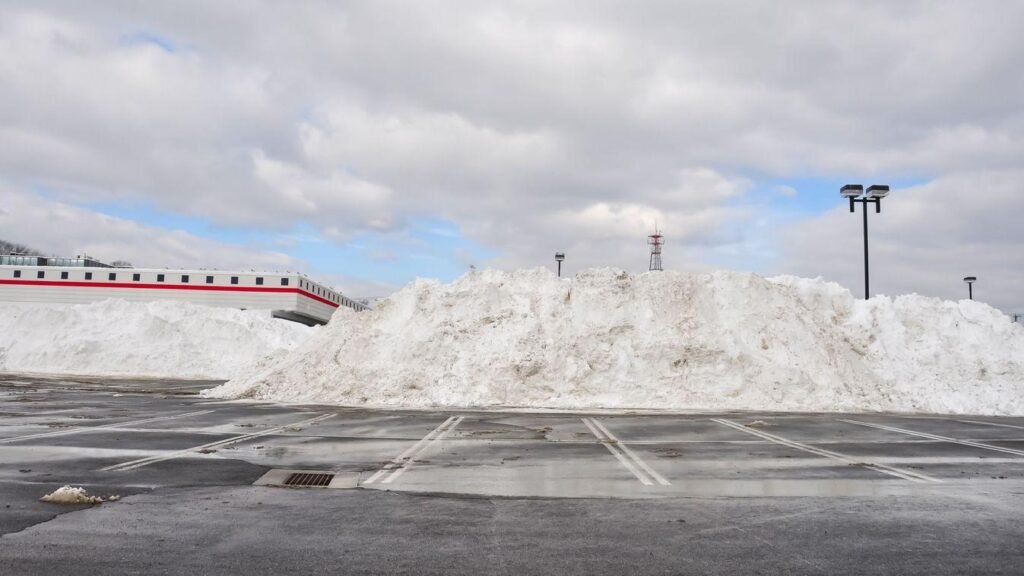
A parking lot still icy after plowing usually has compacted snow, bonded ice, or meltwater that froze again after the plow passed. Plowing clears bulk snow, but a blade may ride over ruts and uneven pavement instead of removing a thin, bonded layer. Traffic presses leftover snow into hardpack, while rain, thawing snow, or freezing rain can leave fresh moisture. In Fredericton, a temperature drop can turn that moisture into a slick surface soon after service.
Why can a parking lot stay slippery after plowing?
A plow clears loose snow but can leave bonded ice or traffic-compacted snow behind. Thawing, rain and freezing rain may also produce a new ice layer after the plow passes.
Compacted snow and ice left behind under traffic
Snow packed by vehicle traffic becomes denser than fresh snowfall and is harder to lift from pavement. Tires press snow into wheel tracks, turning areas near entrances, stalls, and turning lanes into hardpack. A plow may remove the upper layer but leave a thin base, especially where pavement has ruts or raised joints. Foot traffic can compact snow on sidewalks and at building doors in the same way.
A bonded ice layer can also remain after a pass, even when the pavement looks mostly clear. The blade may not scrape deeply enough to break the bond without catching damaged asphalt or concrete. This is why parking lot snow plowing and ice control are separate tasks. A second pass, careful scraping, or targeted treatment may be needed.
Thawing snow, freezing rain and overnight refreezing
A thaw can leave water on pavement that freezes again when temperatures fall. Snowbanks may release runoff across a parking stall or pedestrian route, while rain or freezing rain can coat pavement after plowing. This freeze-thaw cycle can create new ice even when the original clearing was effective. Shaded corners and low spots may stay wet longer than exposed pavement.
Black ice is a thin, often hard-to-see film that can blend into dark pavement. A wet-looking surface is not always just water, and a bare-looking lot is not proof of safe footing. Walk and inspect cautiously, with extra care near slopes, entrances, and shaded areas. Check again after a temperature drop, since conditions can change after the plow leaves.
What should a property manager do right away?
When a lot remains slippery, inspect the hazard safely, limit access where needed, and arrange a response that matches the surface. Start with the main entrance and routes that connect parking to the building, including accessible spaces and curb ramps. Contact the snow and ice contractor to request the needed follow-up, such as another pass, scraping, de-icing, or sanding for traction. Record the location, time, weather, and action, then check the area again after work.
| Hazard | Common location | Practical response |
|---|---|---|
| Compacted snow | Wheel tracks and turning lanes | Request scraping or another suitable clearing pass. Check that the pavement can take the equipment. |
| Thin or bonded ice | Entrances and shaded pavement | Ask about a compatible de-icer, then remove loosened slush where practical. |
| Low traction in cold weather | Slopes and pedestrian paths | Consider an abrasive such as sand, following site procedures. |
| Refreezing water | Drains, downspouts, or low spots | Identify the water source and arrange a safe temporary response. |
| Unchecked hazard | Busy route or entrance | Restrict access while arranging treatment and a safe alternate route. |
Use signs or barriers to direct people away from untreated ice and toward a checked, walkable alternative route. Recheck after treatment because loosened slush can refreeze.
What is the difference between plowing, de-icing and sanding?
Plowing removes snow; a suitable de-icer loosens or melts ice; sanding improves traction without melting it. The right sequence depends on conditions.
Remove loose snow and hardpack where safe before treating
Clear loose snow before applying a de-icer so the product can reach the pavement or ice bond. On larger sites, a finishing pass or targeted scraping may help with compacted tracks. Use equipment suited to the pavement, since aggressive scraping can mark asphalt, concrete, or pavers. Remove loosened slush where practical, because it can freeze again.
Salt helps loosen bonded ice in suitable pavement temperatures
Salt can help loosen bonded ice when the product and conditions are suitable. Air temperature alone does not show how well it will work, since pavement temperature, ice thickness, moisture, and precipitation also matter. Follow the product label for temperature range, application, surface compatibility, and handling. Spread a measured amount evenly, then remove slush and inspect the result.
Heavy salting after plowing does not guarantee a faster or safer result. Excess material can run toward drains, affect nearby plants, and contribute to corrosion or surface damage. A pre-treatment may help limit bonding when the forecast and pavement conditions suit the product, but it cannot replace plowing or later checks. Avoid applying any de-icer without checking its directions and the site surface.
Sand adds traction but does not melt ice
Sand can provide grip when melting is slow or a de-icer is unlikely to work well in the cold. Apply it where people walk or vehicles turn, rather than spreading excess material across every surface. Traffic, wind, and runoff can move it, so a later check may show whether more is needed. Sweep or collect the grit when conditions allow, especially around drains and entrances.
Where does ice tend to return on commercial properties?
Ice often returns where people walk, vehicles turn, or water collects. Check entrances, accessible parking connections, curb ramps, loading docks, and shaded corners first. Downspouts, blocked drains, low spots, and runoff from snowbanks can feed water onto otherwise cleared pavement. High-traffic braking and turning areas may also become polished when vehicles press snow into a hard layer.
How should plowing and ice checks be coordinated during a storm?
A useful commercial winter plan treats plowing and ice control as separate tasks. The sequence depends on the storm, business access and agreed service scope:
- Before snowfall: mark priority entrances, accessible connections, drains and hazards; decide who can request follow-up.
- During the storm: clear in stages where safe and practical so traffic does not pack every route into hard snow. Maintain an agreed pedestrian route.
- After each plow pass: inspect for hardpack, bonded ice and slush. Apply suitable targeted ice treatment, then check the result.
- After a thaw or temperature change: recheck high-risk locations even if no new snow has fallen. Record stalls blocked by parked cars and arrange follow-up once they are accessible.
What should a commercial snow and ice agreement include?
A commercial snow and ice agreement should spell out the work, service triggers, priority areas, and follow-up process. Define plowing separately from salting, sanding, hand shovelling, and repeat checks. List entrances, accessible routes, loading areas, and any known problem spots. State how blocked entrances or parked vehicles are handled, and who staff should contact when conditions change.
Written notes can help managers track service times, weather, treated locations, materials, and unresolved hazards. Records support oversight, but do not remove slip risks or guarantee legal compliance. Confirm the service boundaries, escalation contact, and whether the provider will report areas it could not reach. A clear scope reduces uncertainty during a storm.
Review commercial snow removal and parking-lot service to understand the work a provider may offer. Ask how salting and de-icing fit into the plan, including any limits tied to temperature or surface type. For building entrances and pedestrian routes, clarify whether manual shovelling is part of the agreement. Then compare those details with the property’s actual access needs.
A clear parking lot may still need ice control
A plowed lot may still contain hardpack, bonded ice or refrozen runoff. Clear snow first, inspect the pavement, choose de-icing or sanding as conditions require, and recheck after treatment. No single product works the same way throughout a storm.
Need commercial ice control in Fredericton?
Atlantic Lawn & Snow provides commercial snow plowing, salting, sanding and ice control in Fredericton. If your parking lot remains slippery after clearing, discuss the site layout, recurring trouble spots and follow-up needs with the team. Request a quote for commercial snow and ice management.
FAQs parking lot slippery after plowing
Why is black ice still present after my lot was plowed?
Thin ice can form from rain, slush or meltwater that refreezes after plowing. It may be difficult to see against dark asphalt. Check shaded areas, entrances and low spots, then treat or restrict access.
Should a commercial parking lot be salted every time it is plowed?
Not always. Check remaining ice, pavement temperature, surface compatibility and product instructions. Treat affected areas where needed rather than salting automatically after every pass.
Is sand better than salt during extreme cold?
Sand may offer useful traction when cold temperatures reduce de-icer performance. It does not melt ice and can be displaced by vehicles or runoff, so inspect again and clean up when appropriate.
How soon should a lot be inspected again after plowing?
Check promptly after plowing and again after a thaw, precipitation or sudden temperature drop. Prioritize entrances, accessible routes, slopes and shaded areas. The agreement should identify who requests and performs follow-up checks.
What if parked vehicles prevented some spaces from being cleared?
Record inaccessible parking stalls and notify the contractor or maintenance lead. Arrange follow-up once vehicles move, based on your agreement. Meanwhile, inspect nearby drive lanes and pedestrian routes for ice.