
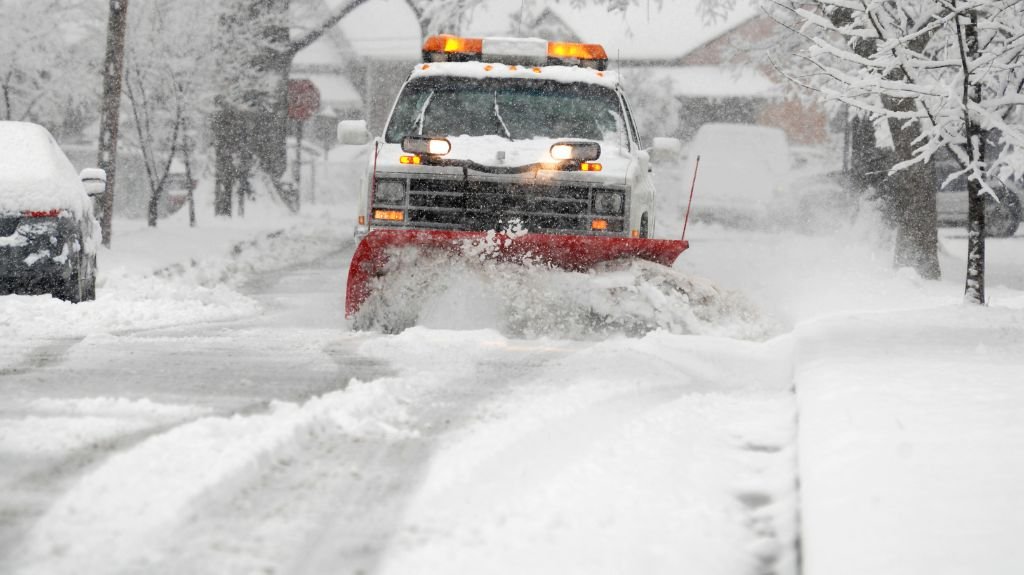
Property owners should clear snow once accumulation reaches a standard trigger depth of 2 inches or 5 centimeters, though heavy wet snow requires earlier intervention than dry powder. This depth balances service costs with property safety, preventing dangerous ice formation while avoiding unnecessary deployment for light dustings.
What is the standard snow plowing depth requirement?
Property owners must determine a baseline depth before initiating winter clearing operations. The industry standard sits at 2 inches or 5 centimeters for residential properties. This depth ensures that equipment operators do not deploy trucks for minor dustings that tires can easily disperse.
Light dry powder allows for deeper accumulation before clearing becomes necessary. Dry snow lacks moisture and does not pack down tightly under vehicle tires. Property managers can wait for 3 to 4 inches of dry powder without risking severe ice formation.
Standard Residential and Commercial Triggers
Residential packages in Fredericton often use a 5cm snowfall trigger to balance service costs with driveway accessibility. Commercial parking lots operate under stricter guidelines that mandate a 1-inch trigger depth. Business owners face high liability risks, requiring immediate action to keep lots safe for customers.
| Property Type | Standard Trigger Depth | Primary Operational Goal |
|---|---|---|
| Residential Driveway | 5 centimeters (2 inches) | Balance cost and daily vehicle access |
| Commercial Parking Lot | 2.5 centimeters (1 inch) | Minimize liability and maintain business flow |
| Walkways and Steps | Manual clearing on demand | Protect pedestrians from slip hazards |
How do snow type and moisture content change when to plow snow?
Snow density dictates the timing of plow deployment far more than raw accumulation numbers do. Maritime weather patterns in Atlantic Canada frequently produce heavy, moisture-laden precipitation. Understanding the snow-to-water equivalent helps operators choose the correct moment to clear surfaces.
Light dry snow features a low water content and remains easy to move with standard equipment. Heavy wet snow contains high moisture levels and packs immense weight. Property owners must monitor snow weight closely to prevent mechanical strain on snow plows and snow blowers.
Managing Heavy Wet Snow Versus Light Powder
Light dry powder thresholds allow for 3 to 4 inches of accumulation before clearing is necessary. Heavy wet snow thresholds require immediate action at 1 to 2 inches of depth. Dense snowpacks strain equipment and transform into solid ice under vehicle tires.
- Monitor the moisture content of incoming storms before setting plow schedules.
- Deploy equipment earlier during wet storms to prevent concrete-like ice layers.
- Utilize snow blowers for light powder and heavy plows for dense accumulations.
What are the risks of waiting too long or plowing too early?
Property owners who delay snow clearing encounter severe operational and safety hurdles. Traffic driving over accumulated snow packs the material into a hard layer that bonds directly to asphalt. Daily freeze-turn cycles turn unplowed surfaces into dangerous sheets of black ice.
Plowing too early creates financial inefficiency and property damage. Deploying heavy trucks for a half-inch dusting wastes fuel and labor resources. Unfrozen ground beneath early snowfalls also catches plow blades, tearing up turfgrass and scattering gravel.
Risks of Delayed Snow Removal
Waiting too long allows vehicle tires to compress snow into a concrete-like ice layer. Commercial parking lots face extreme liability risks when ice patches cause slip-and-fall accidents. Property managers must clear accumulation promptly to maintain safe walking and driving conditions.
- Prevent tire compaction from bonding snow layers to pavement surfaces.
- Reduce commercial liability risks by clearing lots before business hours.
- Avoid mechanical damage caused by scraping frozen, heavy ice packs.
How do weather dynamics and Atlantic Canada soil challenges affect snow plowing?
Regional climate factors require specific property management strategies throughout Fredericton winters. High winds create massive drifts that accumulate faster than flat regional snowfall measurements suggest. Frost heave cycles also alter the elevation of paved and unpaved surfaces.
Property layout protection requires high-visibility markers along driveways and parking perimeters. Operators use these reflective stakes to locate edges hidden beneath deep snowdrifts. Strategic snow stacking prevents meltwater from flooding building foundations during mid-winter thaws.
Protecting Your Property During Winter Storms
Heavy winter plow blades can easily catch unpaved driveway edges and tear delicate turf. Operators prevent lawn damage by angling blades properly and using protective shoes on snow removal equipment. Rotating snow pile locations also stops concentrated soil compaction and chemical lawn burn.
- Install reflective driveway stakes in late autumn before the ground freezes.
- Rotate snow pile zones to distribute weight and prevent turf suffocation.
- Direct meltwater away from building foundations to stop spring flooding.
Professional Snow Removal Solutions by Atlantic Lawn and Snow
Atlantic Lawn and Snow provides comprehensive property maintenance services across Fredericton, NB, using automated weather-monitoring protocols. Seasonal packages include residential snow plowing triggered at the 5cm mark to ensure reliable access without over-servicing light dustings. Crews also handle manual shoveling for high-liability walkways and apply targeted salt de-icing to eliminate hardpack ice layers. Commercial clients benefit from 24/7 storm monitoring and overnight clearing to keep parking lots safe before opening hours.
Summary
- Standard 5cm trigger depth balances cost and safety for residential properties.
- Heavy wet snow requires earlier clearing than dry powder to prevent ice bonding.
- Commercial properties need lower triggers due to high liability and traffic volume.
- Municipal snow banks require follow-up property clearing to maintain vehicle access.
FAQ’s snow plowing depth
How many inches of snow should fall before you plow a residential driveway?
Residential driveways are typically plowed once accumulation reaches 5 centimeters. This threshold ensures driveways remain accessible while avoiding unnecessary service visits for light dustings.
When should you call a snow plow service during a storm?
Property owners utilizing automated seasonal packages do not need to call during storms because weather-monitoring systems dispatch crews automatically. Per-visit clients should call once accumulation reaches local service thresholds.
How do you handle municipal snow banks left at the end of the driveway?
Municipal plow trucks often push heavy snow ridges across driveway entrances after standard clearing. Comprehensive seasonal packages include follow-up clean-up services to clear these secondary berms.
Is salting necessary after every snow plowing visit?
Salting is essential to manage the compressed ice layer left behind by vehicle tires. De-icing materials lower the freezing point and prevent hazardous black ice formation.
What is the difference between commercial and residential snow contracts?
Commercial contracts feature lower trigger depths and overnight clearing to manage high liability and traffic volume. Residential agreements focus on daily commuting schedules and cost-efficiency.