
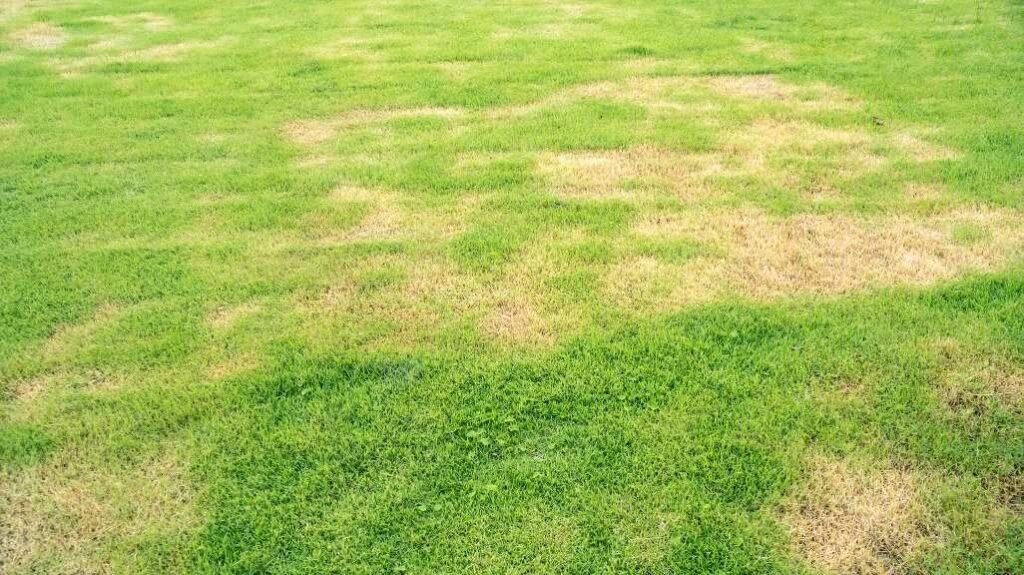
Walk outside on an April morning in Fredericton, and the post-winter lawn reveal can be a rough one, brown circles where snow mould settled, bare strips where grubs spent the fall, and thin patches that barely survived winter. It’s a frustrating sight, and one that many New Brunswick homeowners face every spring without quite knowing where to start.
Finding reliable patchy lawn repair in Fredericton isn’t as simple as grabbing a bag of grass seed. Atlantic Canada’s combination of clay-heavy soil, extended freeze-thaw cycles, humid summers, and heavy snowfall creates lawn challenges that generic advice from other regions misses entirely. What works in Ontario rarely translates to New Brunswick conditions.
What most homeowners also miss is that bare spots are rarely a surface problem. They almost always signal something happening below ground, compacted soil blocking nutrients, acidic pH preventing absorption, or root damage from pests or seasonal disease. This guide covers why patches form in Fredericton lawns, how to diagnose the cause, and which professional and DIY strategies actually work in New Brunswick. Atlantic Lawn & Snow has spent over 15 years helping Fredericton homeowners and commercial properties build lawns that hold up through everything Atlantic Canada delivers, and this guide reflects that on-the-ground experience.
Why Fredericton lawns develop bare and patchy areas
Understanding what’s causing bare spots is the essential first step, the right fix depends entirely on an accurate diagnosis. Fredericton’s soil and climate create several interrelated causes of lawn patchiness, and more than one factor is usually at work at the same time.
Compacted, clay-heavy soil ranks as the most common underlying cause. New Brunswick’s residential soils compact readily under foot traffic, mowing, and repeated freeze-thaw cycles, blocking oxygen, water, and nutrients from reaching grassroots. Dead zones form quickly, and weeds like plantain colonize those spots before grass has a chance to recover.
Snow mould surfaces every spring as snowpack melts, leaving light-grey or pinkish circular patches of matted, dead grass across Fredericton lawns. This fungal disease thrives beneath heavy snow in cold, damp conditions, especially when long grass enters winter with poor air circulation between blades.
Nutrient deficiencies and acidic soil thin turf quietly over time. New Brunswick soils trend acidic, which prevents grass from absorbing nutrients even when fertilizer is regularly applied. Without corrected soil chemistry, growth stays sparse regardless of effort.
Invasive weeds like dandelions, crabgrass, and plantain colonize bare spots fast and outcompete grass for water, sunlight, and nutrients. The longer they establish, the harder recovery becomes.
Pest and animal damage adds to the problem. Grub infestations eat through root systems beneath the surface, causing sections of turf to separate from the ground. Skunks digging for grubs leave additional surface disruption on top of that root damage.
Improper mowing and watering weaken turf steadily. Cutting grass shorter than 6 centimetres compromises root systems, while shallow, frequent watering keeps roots near the surface where summer heat causes the most damage.
Identifying the specific cause before treating patches determines which approach will produce lasting results.
Soil health and aeration – the foundation of patchy lawn repair
Lasting repair starts in the soil, not at the surface. Without addressing underlying soil conditions first, seed and fertilizer won’t produce results that hold up season after season.
Professional core aeration: why it matters in Fredericton
Core aeration is fundamentally different from surface spiking. Professional aeration removes actual soil plugs from the ground, opening real channels for air, water, and nutrients to reach the root zone. For Fredericton’s clay-heavy, compacted soils, this distinction is significant; surface tools barely touch what core aeration achieves consistently.
Those open channels also serve as ideal contact points for grass seed during overseeding, giving new seed direct access to loosened soil rather than sitting on top of dense, compacted turf. Both fertilizer and seed perform considerably better on aerated ground.
Atlantic Lawn & Snow delivers professional-grade core aeration across residential and commercial properties in Fredericton using equipment that consumer-grade tools simply can’t replicate. The optimal timing in New Brunswick is early spring or early fall. Think of aeration as the foundation; every other treatment performs better because of it.
Topdressing and soil pH correction
Paired with aeration, topdressing, and pH correction set the soil up to genuinely support healthy grass long-term. Lawn topdressing involves raking a thin layer of fine compost into the surface, improving soil structure, feeding beneficial microorganisms, retaining moisture, and delivering slow-release natural nutrition. Applied before overseeding, it gives new seed the best possible start in bare or thin areas.
Soil pH is a detail many Fredericton homeowners overlook entirely. When soil is too acidic, as New Brunswick soils commonly are, grass can’t absorb nutrients effectively, even with regular fertilizer applications. Lime applications correct this imbalance and allow nutrients to actually reach the plants.
Atlantic Lawn & Snow‘s fertilization program includes soil pH assessment, so every treatment is absorbed rather than wasted. When pH and organic matter are both in the right range, thin turf responds to seeding and fertilization in ways it simply won’t on poorly prepared soil.
Overseeding and fertilization – restoring density and colour
Once soil conditions are addressed, overseeding and fertilization become the direct tools for filling bare areas and rebuilding density that holds through Fredericton’s challenging seasons.
Overseeding bare and thin patches
Grass variety selection matters as much as seeding technique. New Brunswick’s climate demands cool-season grasses, a blend of fine fescues and perennial ryegrass performs reliably in Fredericton, and including white clover adds natural nitrogen fixation while building drought resilience through summer.
Atlantic Lawn & Snow selects premium grass seed blends specifically suited for New Brunswick conditions during overseeding, not generic off-the-shelf seed that may underperform in Atlantic Canada’s climate.
Timing is critical. Late summer to early fall (mid-August through September) is the optimal window, soil temperatures remain warm enough for germination, while cooler air reduces stress on young seedlings. Spring overseeding is viable but faces considerably higher weed competition.
For DIY repairs, follow this basic sequence:
- Lightly rake and loosen the soil surface
- Apply a thin compost layer before seeding
- Spread seed evenly across the bare or thin area
- Water deeply and consistently until seedlings establish
- Protect newly seeded areas with netting to prevent birds and squirrels from consuming seed before it germinates
Fertilization: nutrition over quick fixes
Thin, patchy grass is often a nutrition problem as much as a seeding issue. When soil nutrients are depleted, grass can’t maintain the density needed to crowd out weeds and recover from seasonal stress. The common mistake is reaching for heavy nitrogen products to green things up quickly, but over time, these applications can burn roots, worsen soil acidity, and weaken turf rather than strengthen it.
Atlantic Lawn & Snow‘s fertilization approach is a recurring seasonal plan that includes spring, summer stress, and fall winterizer treatments timed to what turf actually needs at each stage of the growing season. Soil pH assessment is built into the program, so every application is genuinely absorbed, not lost to acidic soil conditions.
Strategic weed control within the fertilization plan builds turf thick enough to naturally suppress dandelions and crabgrass, addressing one of the core drivers of recurring patchiness. Consistent seasonal nutrition is what produces a lawn that genuinely holds up year after year in Fredericton’s climate.
When to call a professional lawn care service in Fredericton
Many small, isolated bare spots can be addressed through DIY effort, raking, compost topdressing, and quality seed. But clear situations exist where professional help delivers more reliable results and breaks the cycle of reseeding that never quite sticks.
Consider professional help when you’re dealing with any of the following:
- Widespread or recurring patchiness covering more than a third of the lawn is a strong signal that something deeper is driving the problem
- The same bare areas return season after season despite repeated reseeding, pointing to drainage issues, chronic compaction, or persistent soil pH imbalance
- Severely compacted clay soil that needs professional-grade aeration equipment, consumer tools simply can’t replicate
- Widespread grub infestations, significant snow mould damage, or persistent fungal disease requiring targeted treatment beyond standard overseeding
- Commercial properties that need consistent, timely service are difficult to maintain reliably in-house
- New residents to Atlantic Canada finding that habits from other regions don’t apply; New Brunswick’s clay soils and cool-season grass requirements create a real learning curve
Atlantic Lawn & Snow has been serving Fredericton homeowners and commercial properties for over 15 years with year-round property care plans covering aeration, overseeding, fertilization, weed control, and mowing, all calibrated for Atlantic Canada’s climate. One reliable seasonal partner means no service gaps and no managing multiple providers. Contact Atlantic Lawn & Snow today to request a professional assessment and get a plan built specifically for your property.
Final thoughts
Fixing a patchy lawn in Fredericton means addressing the real underlying cause, not just seeding over bare spots. Compacted soil, acidic pH, snow mould, pest damage, and nutrient depletion all require specific, localized treatments, and generic advice written for other climates frequently misses the mark here.
The most effective approach follows a clear sequence: identify the real cause, correct soil health through aeration and topdressing, overseed with climate-appropriate grass varieties, and maintain density with a recurring seasonal fertilization program. Done consistently, this builds a lawn that holds up through everything Fredericton’s winters, springs, and summers deliver.
Atlantic Lawn & Snow is Fredericton’s trusted local partner for patchy lawn repair, lawn restoration, and year-round property care. Contact us today to schedule a professional assessment and get a plan built specifically for your property and Atlantic Canada’s climate.
FAQs about solutions for patchy lawns
What is the best time of year to fix a patchy lawn in Fredericton?
Late summer to early fall, mid-August through September, is the optimal window for overseeding and aeration in Fredericton. Soil stays warm enough for good germination while cooling air reduces stress on young seedlings, and weed pressure drops considerably compared to spring. Early spring is a solid secondary option once the ground has fully thawed and snow mould has been cleared.
Why does my lawn keep developing the same bare spots every year?
Recurring bare spots almost always signal an unresolved underlying problem, chronic compaction, drainage issues, persistent grub activity, or soil pH imbalance. Simply reseeding the same areas without fixing the root cause produces the same result each season. A professional assessment identifies what’s actually driving the problem so the right corrective treatment can be applied rather than repeating the cycle.
Does Atlantic Lawn & Snow offer overseeding and aeration services in Fredericton?
Yes, Atlantic Lawn & Snow provides professional core aeration and overseeding using professional-grade equipment and premium grass seed blends suited for New Brunswick conditions. This service is part of a structured seasonal care program designed to produce sustained turf improvement, not a one-time visit with short-term results.
Can I fix patchy grass myself, or do I need a professional?
Small, isolated bare spots can often be repaired with raking, compost topdressing, and quality seed, a practical DIY approach for minor issues. Widespread patchiness, recurring compaction, significant fungal disease, or commercial property needs benefit considerably from professional services with the right equipment and regional expertise. When unsure of the cause, a professional assessment is the most efficient first step.