
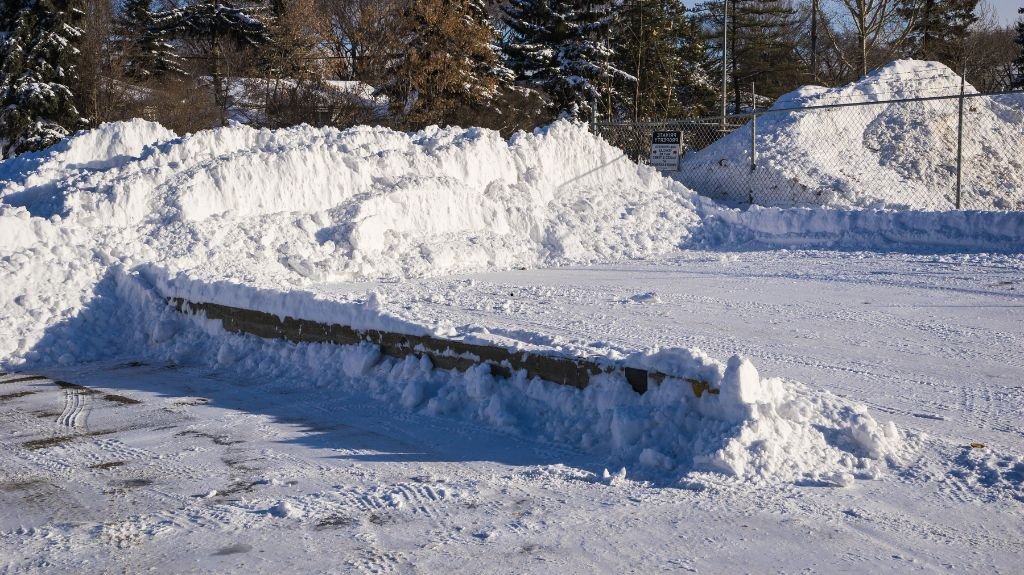
Can a convenient snow pile quietly ruin a lawn before spring arrives? Can a cleared driveway still create blocked views, poor drainage, and icy paths after a Fredericton thaw?
Knowing where to pile snow protects turf, buildings, and safe access. The right spot is a planned, low-use area with room for winter buildup, a safe slope for meltwater, and distance from roads, drains, gardens, and entrances. Atlantic Lawn & Snow uses this kind of site planning to protect properties through winter and spring.
A pile may look harmless after one storm, then grow dense and salt-filled by late winter. The sections below show where snow belongs, which locations need to stay clear, and how to help grass recover.
Where should snow be piled to protect your lawn?
To protect a lawn, snow belongs in a broad, low-use area that drains safely and stays away from valued turf. The best snow pile placement gives wet Atlantic snow room to spread instead of forming a tall, compact bank. In Fredericton, clay-heavy soil can stay cold and soaked long after snow removal and yard maintenance.
A safe snow storage lawn damage plan also keeps meltwater from moving across paths, driveways, or neighbouring land. Choose an area before winter starts, then review it after major storms. This prevents rushed choices during overnight clearing.
Choose a durable snow storage zone away from high-value turf
A durable snow storage zone is a wide, level section of healthy grass away from gardens, trees, play areas, and drainage features. Let snow spread outward across that area instead of building one dense mound. Large piles melt late, leaving grass dark, cold, and wet during early spring.
Signs a lawn area is suitable for snow storage
- The area has enough open space for repeated snowfall. It sits away from busy paths and outdoor activity areas. It does not crowd a driveway or road entrance.
- The ground slopes gently away from the house. Meltwater does not run toward a walk, patio, or low spot. Nearby drains and ditches remain clear.
- The turf is plain, healthy grass without shrubs or garden beds. There are no young trees or shallow roots nearby. Snow can spread without crushing landscape features.
Atlantic Lawn & Snow may rotate pile locations or use non-lawn areas where the property layout permits it. That reduces repeated pressure on the same patch of turf.
Rotate snow pile placement to limit soil compaction
Rotating where to pile snow limits the soil pressure that builds under heavy, wet piles. Repeated piles press clay soil into a dense layer, reducing the air and water that grass roots need. Homeowners can set aside an overflow area, while commercial sites should map primary and secondary storage zones before winter.
Keep salt-laden snow away from grass and landscape beds
Salt-laden snow needs a separate safe snow piling location away from plants and lawn edges. Driveway and parking-lot snow often carries salt, sand, grit, and vehicle residue. Keep it away from hedges, shrubs, garden beds, and tree root zones, then use calcium-based or salting and de-icing near grass where practical.
Snow pile locations to avoid on every property
Snow pile locations to avoid include any space that blocks sightlines, access, drainage, or emergency equipment. Snow should stay on the black ice prevention unless an approved arrangement allows another location. A short push in the wrong direction can create a long spring repair.
For homes and businesses, no-storage zones need clear markers before deep snow hides curbs and features. Keep roads, paths, equipment, and building access free throughout the season. Review pile height after each heavy snowfall.
Keep snow away from driveway entrances, roads, and pedestrian routes
Keeping snow away from driveway entrances and pedestrian routes protects people using vehicles, bicycles, mobility devices, and footpaths. Tall banks hide approaching traffic, children, and walkers, forcing drivers farther into the street. Do not push snow into roads, sidewalks, crosswalks, or neighbouring yards.
Places snow should never be piled
- Snow should not sit on sidewalks or public roads. It narrows travel space and can refreeze into hard ridges. Municipal ploughs may push it back toward the property.
- Snow must stay clear of fire hydrants and building exits. Emergency crews need quick access in poor weather. Doors also need room to open fully.
- Snow cannot block accessible parking, curb ramps, fire lanes, loading zones, or waste areas. These spaces need reliable access for people and vehicles. commercial snow removal must protect daily operations.
Protect foundations, drainage systems, utilities, and septic areas
Protecting foundations and drainage systems starts with keeping snow well away from building edges and water routes. Avoid foundations, basement windows, window wells, doors, garage entrances, and sump-pump discharge areas. Rapid thaws and rain-on-snow weather can send a large flow of water toward low spots.
Keep piles away from catch basins, culverts, ditches, swales, wells, septic tanks, septic fields, and retaining walls. Mark utility boxes, drains, garden edges, and buried features with reflective stakes snow plowing services. This simple snow pile damage prevention step helps plough operators see what winter cover hides.
Create a snow storage plan before winter arrives
A snow storage plan identifies where snow goes before a storm leaves the property crowded and slippery. The plan matches snow volume, access needs, meltwater flow, and available equipment to each part of the site. Written notes help households, tenants, staff, and snow crews follow the same layout.
For commercial properties, include parking demand, emergency access, loading activity, and overnight service in the plan. For homes, a simple sketch often works well. The goal is to avoid moving the same snow twice.
Map primary, secondary, and no-snow zones
Primary, secondary, and no-snow zones turn snow piling tips into a practical map. A primary zone handles normal storms, while a secondary zone takes overflow after heavier accumulation. No-snow zones protect entrances, drainage features, landscaped areas, and emergency equipment.
| Snow storage zone | Best use | Key restrictions |
|---|---|---|
| Primary zone | Routine clearing | Keep clear of drains and sightlines |
| Secondary zone | Heavy storm overflow | Use before primary piles grow too high |
| No-snow zone | Protected access areas | No piles near exits, utilities, or walkways |
commercial snow removal checklist should share the map with tenants, site staff, and snow contractors. A visible plan helps everyone understand where to stack snow without losing parking or access.
Match snow removal storage to the property and equipment
Snow removal storage must fit the equipment used on the property. Shovels, snowblowers, ploughs, and loaders all need different turning space and push routes. Atlantic Lawn & Snow uses ploughs for long runs and snow shoveling service in tighter suburban spaces, while larger sites often use low-use perimeter zones.
How can you reduce lawn damage during snow melt?
Reducing lawn damage during snow melt starts with regular checks of pile size, drainage, and salt exposure. Review snow accumulation management after heavy snowfall, warm weather, and rain-on-snow events. Early action can stop meltwater from turning into ice or moving toward the house.
spring lawn care steps, keep vehicles off soft, saturated grass. Wet clay soil compacts easily under tires and equipment. Clear debris only after the lawn begins to dry.
Inspect piles during thaws and after major storms
Inspecting snow piles during thaws reveals small problems before they become costly repairs. Check for blocked drains, water moving toward foundations, and piles growing into sightlines. Remove slush and loose ice before overnight cold turns it into hard-packed ice, and watch for reduced parking, delivery, or emergency access.
Support lawn recovery after snow piles melt
Lawn recovery after snow piles melt needs patience and light spring care. Wait until turf dries before raking matted grass or using equipment, then remove gravel, sand, and debris from ploughing. aeration and overseeding can help thin or compacted areas, and Atlantic Lawn & Snow offers spring cleanup and lawn care programs for winter-affected turf.
In summary
The right answer to where to pile snow is a planned, low-use area with enough space for repeated storms and safe meltwater flow. Keep piles away from valued lawn, sightlines, drains, buildings, walkways, utilities, and emergency access. A primary zone and overflow zone make snow removal safer as winter builds.
Fredericton homeowners and property managers can reduce spring repairs by checking piles throughout winter and when to book snow removal. Atlantic Lawn & Snow can help build a site-specific plan for snow clearing, ice control, lawn recovery, and service packages.
FAQ’s
These common questions address lawn protection snow removal, limited storage space, and spring melt concerns. The answers apply to Fredericton homes and commercial properties facing wet snow and freeze-thaw weather. Each property still needs a plan based on its slope, access routes, and available space.
Can snow piles kill grass?
Normal snow cover rarely kills grass by itself. Large, dense piles can delay green-up, core aeration lawn, and raise the risk of snow mould. Salt-filled snow makes the risk worse, especially along driveway and parking-lot edges.
Is it okay to pile snow on the lawn?
A lawn can be used for snow storage if no better location exists. Choose broad, healthy, low-use turf away from drainage paths, gardens, and salt exposure. Avoid building one tall pile in the same spot every winter.
How far should snow be piled from a house?
Snow should not sit against foundations, doors, basement windows, vents, or window wells. Choose a location where meltwater flows away from the building and does not cross walkways. Keep garage entrances and sump-pump discharge areas clear as well.
What should I do if my yard has limited snow storage space?
Use a planned overflow area before piles block views, parking, or access. Tight lots may need snow relocation or hauling as winter accumulation grows. seasonal contract options before storage zones become full.
How do I fix salt damage on grass after winter?
Soak salt-affected grass in April once the ground has thawed and can drain. Remove sand and debris, then assess thin areas after the lawn dries. patchy lawn solutions when weather and soil conditions allow.