
Have you ever wondered why your lawn stays patchy despite regular watering? Or why puddles form on your grass after every rainfall while your neighbour’s yard soaks it right up? These frustrating problems often point to a hidden issue lurking beneath the surface: compacted soil.
Core aeration offers a targeted solution for lawns struggling with poor drainage, thin grass, and stubborn bare spots. This process removes small plugs of soil to relieve compaction and restore your lawn’s ability to breathe. In this guide, you’ll learn the specific, testable signs that indicate your Fredericton lawn needs professional attention and discover the optimal timing for this lawn care service.
Let’s examine how to diagnose soil problems and determine if your property would benefit from aeration.
What is core aeration and why does it matter for New Brunswick lawns?
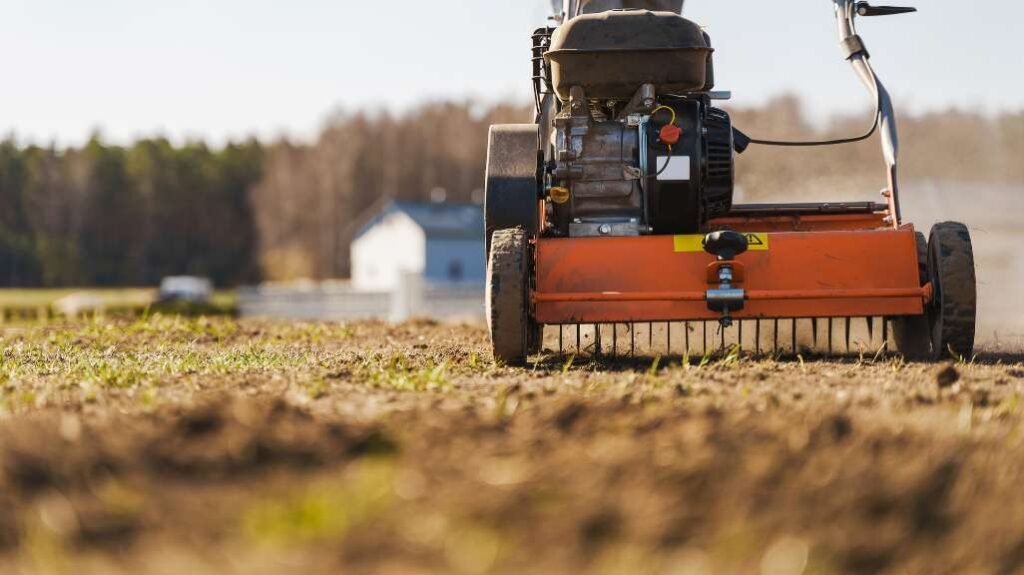
Core aeration is the mechanical removal of small soil plugs from your lawn using hollow tines. Unlike spike aeration, which simply pokes holes and can worsen compaction by pushing soil sideways, core aeration physically extracts cylindrical plugs typically 2 to 4 inches deep and half an inch wide.
This distinction matters significantly for Atlantic Canadian properties. Fredericton’s heavy clay soils and the region’s harsh freeze-thaw cycles create ideal conditions for severe compaction. When soil particles press together tightly, the pore spaces that normally hold air and water collapse. Grass roots literally suffocate because oxygen cannot penetrate the dense soil layer.
Compacted soil also prevents water from filtering down to the root zone. Instead, rainfall runs off toward driveways and sidewalks, wasting moisture your lawn desperately needs. Fertilizers sit on the surface rather than reaching hungry roots below. Over time, grass thins out and weeds move in because they tolerate poor conditions better than quality turf.
Thatch buildup compounds these problems. Thatch is the layer of dead stems, roots, and organic debris that accumulates between green grass blades and soil. A thin thatch layer provides cushioning and temperature regulation. However, when this layer exceeds half an inch, it acts like a waterproof barrier. Rain and nutrients cannot pass through, and grass roots grow horizontally in the thatch instead of diving deep into soil.
Core aeration addresses both issues at once. The process punches through thatch and extracts compacted soil, creating immediate channels for air, water, and nutrients. The removed plugs break down on your lawn’s surface within two weeks, releasing beneficial microorganisms that naturally decompose excess thatch.
For New Brunswick homeowners and commercial property managers, this intervention proves necessary. Heavy snowbanks, snow removal equipment, and regular foot traffic all contribute to soil compression. Without periodic aeration, lawns gradually decline no matter how much you water or fertilize.
How to test if your lawn has compacted soil
You don’t need expensive equipment to diagnose compaction. Start with the screwdriver test, the most reliable DIY method. Take a standard screwdriver and push it straight down into your lawn. In healthy soil, the screwdriver should slide in easily for 2 to 3 inches with minimal resistance. If you need significant force or the screwdriver stops after an inch, your soil is compacted and needs professional attention.
Visual symptoms provide additional clues. Walk your property after a rainfall and observe water behaviour. Healthy lawns absorb water within 30 minutes. If puddles linger for hours or water runs off toward paved surfaces, compaction is sealing your soil. Pay special attention to high-traffic areas near walkways, driveways, and play zones where feet and equipment compress soil most intensely.
Bare patches that refuse to fill in despite overseeding often indicate compacted zones where new grass cannot establish roots. Yellow or brown spots that persist even after fertilizing suggest nutrients aren’t reaching the root zone because compacted soil blocks absorption.
The “spongy lawn” symptom confuses many homeowners. If your lawn feels springy underfoot and grass appears yellow or thin, you might assume the turf is dead and needs more water. This diagnosis is usually wrong. That spongy feeling indicates excessive thatch buildup, not dead grass. Adding more water and surface fertilizer only worsens the problem by encouraging shallow root growth in the thatch layer.
Here’s a quick comparison to help identify your lawn’s condition:
| Healthy Lawn Characteristics | Compacted Lawn Symptoms |
|---|---|
| Screwdriver penetrates 2-3 inches easily | Screwdriver meets hard resistance after 1 inch |
| Water absorbs within 30 minutes | Puddles remain for hours after rain |
| Thick, uniform grass coverage | Bare patches in walkways and high-traffic zones |
| Deep green colour after fertilizing | Yellow spots despite regular feeding |
| Firm but not hard underfoot | Either rock-hard or excessively spongy |
When DIY assessment reveals multiple warning signs, consider professional soil testing through the New Brunswick Department of Agriculture. Laboratory analysis measures compaction levels, pH balance, and nutrient deficiencies, providing a complete picture of your lawn’s underground health. This data helps lawn care professionals design targeted treatment plans rather than guessing at solutions.
When should Fredericton homeowners schedule core aeration?
Timing determines if aeration helps or harms your lawn. The ideal window for Atlantic Canadian properties runs from late August through September. This period offers perfect conditions: air temperatures cool down while soil remains warm from summer heat. Cool-season grasses common in Fredericton, including Kentucky bluegrass, perennial ryegrass, and fine fescues, enter their most active growth phase during fall.
The science behind fall timing is straightforward. Grass plants focus energy on root development when air cools but soil stays warm. Aeration creates temporary stress by removing soil plugs, but actively growing grass recovers quickly and fills in the holes within two weeks. The open channels also provide an ideal seedbed for overseeding, allowing new grass varieties to establish before winter.
A secondary aeration window opens in late May after soil completely thaws but before summer heat arrives. Spring aeration works well for lawns that suffered severe winter damage or extreme compaction. However, timing requires caution if you’ve applied pre-emergent crabgrass preventers. Aeration breaks the chemical barrier these products create, potentially allowing dormant weed seeds to germinate.
Avoid aeration under these conditions:
- Frozen or partially frozen ground (typically November through April in New Brunswick)
- Waterlogged soil that squishes underfoot
- Mid-summer heat waves above 30°C
- Drought conditions when grass shows stress
- Within four weeks of applying pre-emergent herbicides
Fall aeration delivers an additional advantage for Atlantic Canadian lawns. The process pairs perfectly with overseeding to introduce drought-resistant grass varieties before winter. Seeds dropped into aeration holes enjoy direct soil contact and protection from birds and heavy rains. By spring, your lawn emerges thicker and more resilient.
Commercial property managers should note that fall aeration also reduces snow mold risk. Improved drainage and oxygen circulation create an environment where fungal diseases struggle to establish during the wet, cold months ahead.
Get professional lawn assessment from Atlantic Lawn and Snow
While rental aerators are available for DIY projects, commercial-grade equipment delivers superior results. Professional machines extract deeper plugs with better coverage density, typically achieving 20 to 40 cores per square foot. This thorough treatment relieves compaction more effectively than consumer-grade tools.
Atlantic Lawn and Snow brings specialized knowledge of New Brunswick’s specific soil conditions and climate challenges. Our team understands exactly when to aerate based on local weather patterns and grass growth cycles. We integrate aeration with complementary services including overseeding, dethatching, and topdressing to maximize your lawn’s recovery and long-term health.
Contact us for a property assessment or to discuss seasonal maintenance plans tailored to Fredericton’s demanding environment. Our commercial-grade equipment and climate-specific expertise help your lawn breathe easier and grow stronger.
FAQ’s about core aeration for lawns
How often should I aerate my lawn in Atlantic Canada?
Standard residential lawns benefit from annual aeration each fall. Properties with heavy clay soil or high foot traffic require twice-yearly treatment in both spring and fall. Commercial properties with constant use often need bi-annual aeration to maintain healthy turf and proper drainage.
Can I aerate my lawn myself or should I hire professionals?
Rental aerators work for small properties but lack the power and tine depth of commercial equipment. Professional machines extract deeper plugs and cover large areas efficiently, completing in hours what might take a weekend with rental tools. Commercial services also include proper timing assessment and integrated treatments.
Will aeration damage my existing grass?
Aeration creates temporary stress, but grass recovers quickly when performed during peak growth periods. You’ll notice holes and soil plugs for about two weeks before they disappear. The long-term benefits of deeper roots and improved nutrient absorption far outweigh the brief cosmetic impact.
What should I do right after my lawn is aerated?
Leave soil plugs on the surface to decompose naturally. This is the optimal time for overseeding and applying slow-release fertilizer since open holes provide direct access to the root zone. Water lightly to help seeds germinate and keep mower blades high for the first two weeks.
Does core aeration help with snow mold prevention?
Yes, fall aeration significantly reduces snow mold risk. The process improves drainage and increases oxygen circulation in soil, eliminating the damp, oxygen-starved conditions where fungal spores thrive. Better soil structure helps your lawn stay healthier throughout New Brunswick’s long winter months.