
Do you wonder why your Fredericton lawn struggles with patchy growth or water pooling, despite regular care? Are you unsure when to tackle common issues like thinning grass or compaction caused by heavy snow? Knowing the optimal timing for lawn aeration is essential for a lush, healthy lawn in Atlantic Canada. This guide explains the best seasons for aeration, why your lawn needs it, and how it fits into a complete care plan tailored to Fredericton’s climate.
Properly timed aeration can make a significant difference in your lawn’s well-being. Let’s look at the specific windows for Fredericton’s climate to help your grass thrive. For local expertise, consider consulting with Atlantic Lawn & Snow to get the timing just right.
When is the best time to aerate your lawn in Fredericton, NB?
The best time to aerate your lawn in Fredericton is during its active growing season, which allows for quick recovery. For the cool-season grasses common in our region, such as Kentucky Bluegrass, Perennial Ryegrass, and Fine Fescues, this means late summer to early fall is the primary window. A secondary chance exists in early spring, but it calls for careful timing to prevent potential issues.
- Optimal Timing: Fall Aeration (Late August to October)
The soil in late summer and early fall is still warm, which promotes rapid root growth and helps the turf recover quickly. The cooler air temperatures reduce stress on the grass and any new seeds you might add. At this time of year, competition from weeds is much lower, giving your grass a better chance to establish itself before winter. Fall aeration also prepares your lawn to store important nutrients, setting it up for a strong return in the spring. This pre-winter strengthening helps your lawn withstand the cold and emerge greener when temperatures rise. - Secondary Timing: Spring Aeration (May to Early June)
Spring can be a good time for lawn aeration when winter has caused significant compaction. You must wait until the ground has completely thawed and the soil is moist but not soaking wet. Aerating a waterlogged lawn can damage the turf structure by smearing the soil, which can hinder root development. A key consideration for spring aeration is that it can bring dormant weed seeds, such as crabgrass, to the surface just as they are ready to germinate. Therefore, a pre-emergent weed management plan is important if you choose spring aeration. Without proper timing, you might inadvertently encourage weed growth.
Avoid aerating in the middle of summer, as high heat puts cool-season grasses under too much stress. The additional stress from aeration can lead to scorched grass and slower recovery. It is also not possible to aerate in late fall or winter when the ground is frozen, as the equipment cannot penetrate the hard ground effectively.
Why does your Fredericton lawn benefit from aeration?
Your Fredericton lawn benefits from aeration because it directly combats soil compaction, a common problem in our area. The region’s naturally heavy, clay-rich soils are prone to becoming tightly packed. This condition is worsened by our intense freeze-thaw cycles, which repeatedly expand and contract the soil, and the weight of heavy winter snow loads and snow removal equipment. When soil is compacted, it chokes grass roots by limiting their access to air, water, and nutrients. This leads to shallow root systems, poor water infiltration, and lawns that are more susceptible to drought and disease.
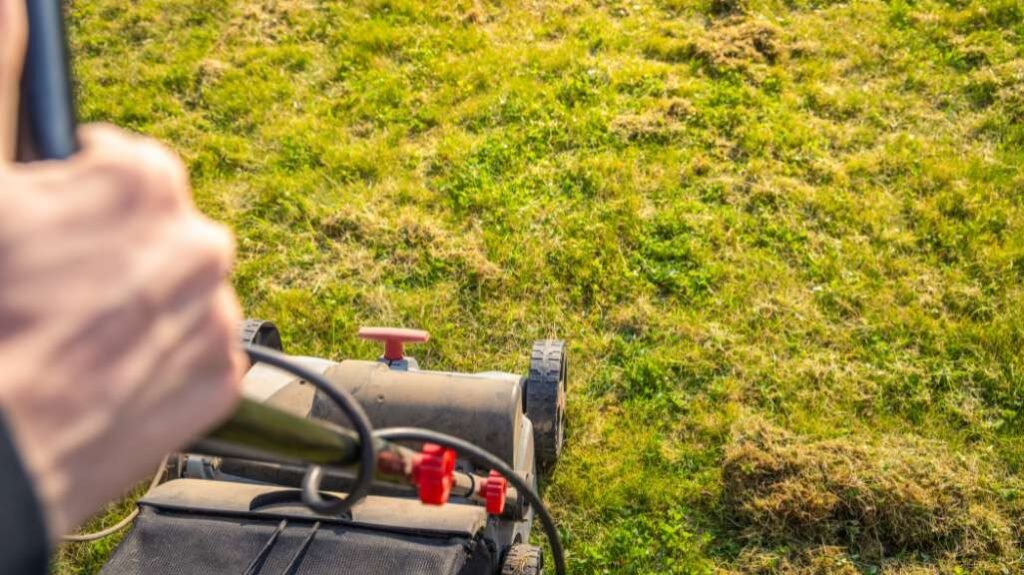
Core aeration is the most effective method for addressing this problem. Unlike spike aeration, which just pokes holes and can further compact soil around the edges of those holes, core aeration uses professional equipment to physically pull small plugs of soil and thatch from the lawn. This process creates open channels that allow essentials like oxygen, moisture, and fertilizer to penetrate the root zone directly. The result is improved air exchange, better water absorption, and more efficient nutrient uptake. It leads to stronger, deeper root development, making your turf more resilient to drought, heat stress, and fungal diseases.
You can check your lawn for several key indicators of compaction. Use the table below to see if your lawn needs aeration.
| Indicator of Lawn Health | Healthy Lawn | Compacted Lawn |
|---|---|---|
| Screwdriver Test | Slides in easily 2-3 inches | Requires significant force |
| Water Absorption | Absorbs quickly | Pools or runs off |
| Thatch Layer | Less than 0.5 inches | Over 0.75 inches, spongy |
| Turf Density | Thick, lush green | Thin, yellowing, patchy |
How does comprehensive lawn care improve turf resilience in Fredericton?
Comprehensive lawn care improves turf resilience by combining aeration with other essential practices to create a powerful, synergistic effect. Aeration is a foundational step that makes subsequent treatments like overseeding and fertilization much more effective. By creating thousands of small openings in the soil, aeration prepares the perfect seedbed for new growth and a direct path for nutrients to reach the roots.
- Overseeding
Spreading new grass seed immediately after aerating is the best way to thicken a thinning lawn. The seeds fall into the aeration holes, which provides excellent seed-to-soil contact. This placement protects the seeds from birds and wind while giving them a moist, sheltered spot to germinate away from direct sun. Introducing new, resilient grass varieties, such as improved fescues or bluegrass blends suited for cooler climates, can bolster your lawn’s ability to withstand Fredericton’s climate, including harsh winters and periods of summer dryness. It also helps fill in bare spots and crowds out weeds. - Fertilization and Topdressing
Applying fertilizer right after aeration ensures that nutrients get past the thatch layer and deep into the root zone where they are needed most. This timing maximizes absorption and strengthens the grass for the coming season, especially important before winter dormancy. For lawns with very heavy clay, applying a thin layer of compost, or topdressing, after aeration allows organic matter to filter into the soil. Over time, this improves the soil structure by making it looser, enhancing drainage, and supporting beneficial microbial activity. This naturally boosts the soil’s health and fertility.
A complete approach addresses common Fredericton lawn issues like bare spots and fungal diseases. Atlantic Lawn & Snow use local expertise and professional-grade equipment to deliver these integrated services. An approach backed by science ensures your property can withstand the specific challenges of the Atlantic Canada climate. This proactive stance helps maintain a consistently attractive and healthy lawn throughout the year.
FAQ’s about lawn aeration timing
What is the difference between core aeration and spike aeration?
Core aeration removes small plugs of soil and thatch from the lawn, creating open channels that directly relieve compaction and improve air and water flow to the roots. Spike aeration only punches holes into the ground. While it creates temporary openings, it can sometimes worsen compaction in clay soils by pushing soil particles closer together around the holes. Core aeration is generally recommended for lasting benefits.
When is it too late to aerate and overseed in Fredericton?
It is too late once soil temperatures are consistently too low for grass seeds to germinate and establish themselves, typically in late fall when nighttime temperatures drop significantly. Additionally, it’s not possible to aerate if the ground is frozen solid, as aeration equipment cannot penetrate it. For best results, aim to complete these tasks several weeks before the first hard frost.
How often should a lawn be aerated in Fredericton?
Annual aeration is recommended for most lawns in Fredericton because of the region’s prevalent clay soil and the compaction caused by heavy snow cover. Lawns with high traffic, such as play areas or frequently used pathways, may benefit from aeration twice a year, typically once in the fall and once in the spring, to maintain optimal soil conditions.
Can I aerate my lawn myself, or should I hire a professional?
While rental aerators are available, professional services use commercial-grade core aerators that are significantly more effective at relieving deep compaction and covering large areas efficiently. Professionals also have the expertise to determine the best timing and methods for your specific lawn conditions, providing a more thorough and beneficial treatment than most homeowner tools.
What should I do after aerating my lawn?
Immediately after aeration is the ideal time to overseed and fertilize. The open channels created by removing soil plugs provide direct access for seeds to reach the soil, promoting better germination and establishment. They also allow fertilizer nutrients to penetrate deep into the root zone quickly, maximizing their effectiveness and strengthening the grass for future growth. Watering thoroughly after these steps is also important.
Does aeration fix all lawn problems?
While aeration is fundamental for soil health and greatly improves many lawn conditions, it works best when combined with other proper care practices. These include appropriate watering techniques, regular and balanced fertilization, effective weed and pest control, and proper mowing heights. Aeration is a key component of a comprehensive lawn care strategy, not a standalone solution for all issues.
Pro Tip:- Build a resilient lawn with expert aeration timing. The key to a healthy Fredericton lawn is performing core aeration at the right time. For our cool-season grasses, fall is the primary season, with spring as a good secondary choice. This single practice is a foundational step for improving overall turf health, especially when dealing with our region’s heavy soil and harsh winters. For lasting results, consider integrated, professional lawn care that addresses all your lawn’s needs, like the services offered by Atlantic Lawn & Snow.