
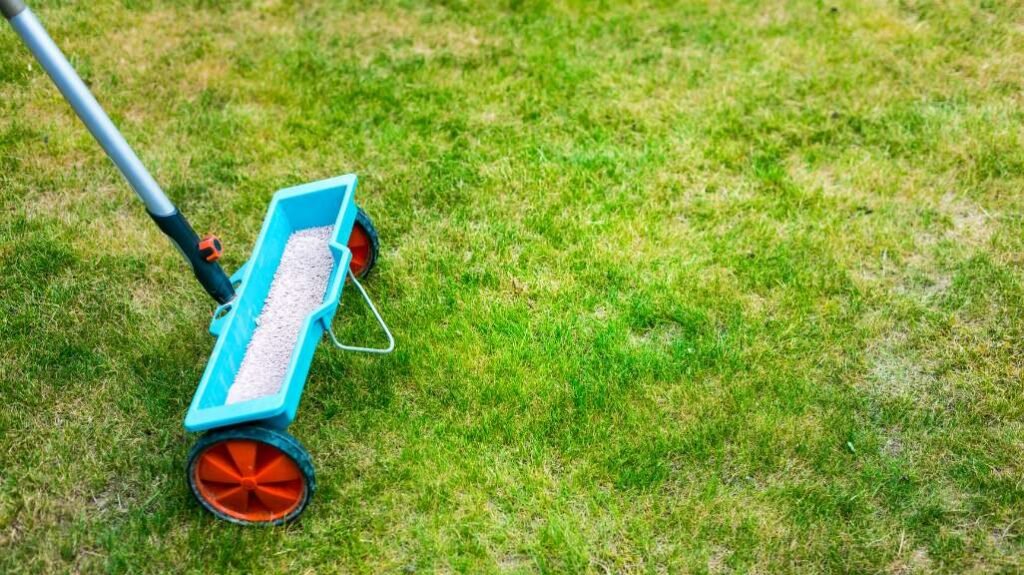
You might be worried why your overseeded lawn still looks thin and patchy despite following every step correctly? Or why some grass seed germinates beautifully while other areas remain bare? The answer often comes down to one overlooked detail: fertilizer choice.
When you overseed a lawn in Fredericton, you’re not just scattering seed on the ground. You’re introducing fragile seedlings into a competitive environment where established grass already controls the nutrients, water, and sunlight. Without the right fertilizer, those new seeds struggle to develop the root systems they need to survive New Brunswick’s acidic soil, clay-heavy ground, and compressed growing season.
Starter fertilizer is the foundation of successful overseeding. Unlike standard lawn fertilizers designed to green up mature grass, starter fertilizers are formulated specifically to support root development in new seedlings. The key is phosphorus, the nutrient that drives downward root growth and helps young grass anchor itself before winter arrives or summer heat sets in.
This article will walk you through the essentials of choosing and applying fertilizer when overseeding. You’ll learn what makes starter fertilizer different, when to apply it for maximum effectiveness in Atlantic Canada’s climate, and how soil conditions affect your fertilizer investment.
What is starter fertilizer and why does overseeding require it?
Starter fertilizer is a specialized product designed specifically for new grass seedlings. Starter fertilizer contains a high concentration of phosphorus, the nutrient responsible for root development in young plants. Standard lawn fertilizers focus on nitrogen to promote green top growth in established turf, but new seedlings have completely different nutritional needs.
Every fertilizer bag displays three numbers called the NPK ratio. These numbers represent Nitrogen (N), Phosphorus (P), and Potassium (K). A typical starter fertilizer might show a ratio like 10-18-10 or 15-25-10. Notice the middle number is always the highest. That middle number is phosphorus, and it’s the priority when overseeding.
Phosphorus stimulates root branching and helps the young plant access water and nutrients deep in the soil. In New Brunswick, where soils are often acidic and clay-heavy, this downward root growth determines whether your new grass survives the dry spells of late July and August or the freeze-thaw cycles of winter. Without adequate phosphorus, seedlings may sprout but will fail to establish strong roots. They’ll remain shallow and weak, vulnerable to drought, disease, and competition from established grass.
Nitrogen, the first number in the NPK ratio, promotes blade growth and that deep green colour. In starter fertilizers, nitrogen is present in moderate amounts, often in a slow-release form. Too much nitrogen too early can burn delicate new sprouts or cause the existing grass to grow so quickly that it shades out and smothers the slower-growing seedlings.
Potassium, the third number, improves overall plant health and stress resistance. This is particularly relevant in Atlantic Canada, where unpredictable weather patterns can stress young grass. Potassium helps seedlings regulate water and resist disease during the vulnerable establishment phase.
The competitive environment is another reason starter fertilizer is non-negotiable. When you overseed, you’re asking new seedlings to compete with mature grass that already has an established root system. The existing turf will naturally dominate the available nutrients, water, and sunlight. Starter fertilizer gives the new seedlings a fighting chance by providing targeted nutrition right where they need it most: at the root zone.
Here’s a comparison table showing the difference between starter fertilizer and standard maintenance fertilizer:
| Feature | Starter Fertilizer | Maintenance Fertilizer |
|---|---|---|
| NPK Ratio Example | 10-18-10 or 15-25-10 | 30-0-10 or 24-4-12 |
| Primary Nutrient | Phosphorus (root growth) | Nitrogen (green-up) |
| Purpose | Establish new seedlings | Maintain established turf |
| Application Timing | At seeding or immediately after | Throughout growing season |
| Nitrogen Release | Slow-release, moderate amount | Fast-release, high amount |
| Risk to New Seed | Safe when applied correctly | Can burn or smother seedlings |
Atlantic Lawn and Snow uses phosphorus-first phosphorus-first starter fertilizers calibrated specifically for the clay-heavy, acidic soil conditions common in Fredericton and across New Brunswick. This regional expertise ensures that the fertilizer you apply actually supports root development rather than washing away or becoming chemically unavailable in the soil.
When should you apply fertilizer during the overseeding process?
The most effective approach is to apply starter fertilizer on the same day as your grass seed. This timing ensures that nutrients are already present in the top layer of soil the moment the first root emerges from the seed coat. Delaying fertilizer application means the seedling must survive on its limited stored energy until nutrients become available, which can slow germination and weaken early growth.
In Fredericton and across Atlantic Canada, the optimal optimal overseeding window is mid-August through September. This late summer to early fall period offers ideal conditions: soil temperatures remain warm enough to trigger germination, while cooler air reduces stress on young seedlings and naturally suppresses weed growth. Early spring is a secondary option, but only after the ground has fully thawed and any snow mould has been cleared. Fertilization timing must align with these windows, not generic calendar dates imported from other regions.
Core aeration should happen before you apply fertilizer and seed. Aeration removes small plugs of soil, reducing compaction and creating pockets where seed and fertilizer can settle together. This prevents the fertilizer from washing away during heavy Atlantic rainstorms and ensures it reaches the root zone where it’s needed. Without aeration, fertilizer often sits on the surface or runs off, wasting your investment.
Follow-up nitrogen fertilization should occur four to six weeks after seeding, once the new grass has been mowed at least twice. At this stage, the seedlings have established root systems and can benefit from nitrogen’s top-growth boost. Applying nitrogen too early shifts the plant’s energy away from root development and toward blade growth, which weakens the long-term health of the lawn.
One of the most damaging mistakes homeowners make is using “weed and feed” products or pre-emergent herbicides during overseeding. These products are designed to prevent seeds from germinating, and they do not distinguish between weed seeds and grass seeds. Applying them at the same time as overseeding will kill your new grass along with any dandelions or crabgrass. Wait until the new grass has been mowed at least three to four times before introducing any chemical weed control.
Here are common timing mistakes to avoid when fertilizing during overseeding:
- Applying winterizer fertilizer during the overseeding process (winterizers are high in potassium and nitrogen but low in phosphorus, which is the opposite of what new seedlings need)
- Fertilizing before correcting soil pH (acidic soil locks nutrients away, making fertilizer ineffective regardless of application rate)
- Skipping aeration and applying fertilizer directly onto compacted soil (the fertilizer cannot penetrate the root zone and often washes away)
- Using pre-emergent herbicides within six weeks of seeding (these products kill grass seed along with weeds)
- Applying follow-up nitrogen too early, before the new grass has been mowed twice (this weakens root development and can burn young plants)
Atlantic Lawn and Snow times fertilizer application based on actual local weather patterns and ground conditions, not generic national advice. This approach optimizes germination rates and ensures that nutrients are available when the grass needs them most, not weeks too early or too late.
How do soil conditions affect fertilizer effectiveness for new grass?
Soil pH is the hidden variable that determines whether your fertilizer investment actually works. In New Brunswick, soils are commonly too acidic, which chemically locks nutrients away from grass roots. Even if you apply the correct starter fertilizer at the right time, acidic soil prevents the grass from absorbing phosphorus, nitrogen, and potassium. The fertilizer becomes essentially wasted, regardless of application rate or product quality.
A soil pH test is the only way to know if your fertilizer can perform. If the pH is below 6.0, the grass cannot efficiently take up the phosphorus in your starter fertilizer. Applying pelletized lime before fertilizing corrects the acidity and unlocks nutrient availability. This step is not optional. It’s the prerequisite that determines whether any other treatment succeeds.
Compaction is the second major barrier to fertilizer effectiveness. New Brunswick’s clay-heavy soils compact readily under snow weight, foot traffic, and freeze-thaw cycles. When compaction levels exceed 300 psi, root penetration and water infiltration are severely inhibited. Fertilizer applied to compacted soil cannot reach the root zone. It sits on the surface or runs off during rain, delivering no benefit to the grass.
Core aeration is the foundation that allows fertilizer to perform. Without it, clay soil prevents oxygen, water, and nutrients from reaching grass roots. No fertilizer program can compensate for this barrier. Aeration is not an optional add-on. It’s the first step that makes every subsequent treatment effective.
Thatch buildup is another barrier that blocks fertilizer and seed from reaching the soil. Thatch is a layer of dead grass stems and roots that accumulates between the green blades and the soil surface. When thatch exceeds half an inch, it acts as a waterproof barrier that reduces seed germination rates by 40% or more. Fertilizer applied over thick thatch never reaches the root zone. Dethatching before overseeding ensures clear soil contact and allows nutrients to penetrate.
Here are the soil preparation steps you should complete before fertilizing during overseeding:
- Conduct a soil pH test to identify acidity levels (available through local garden centres or extension services)
- Apply pelletized lime if pH is below 6.0, allowing at least two weeks for it to begin correcting acidity
- Perform core aeration to remove soil plugs and reduce compaction, creating channels for fertilizer, water, and oxygen to reach roots
- Dethatch if the thatch layer exceeds half an inch, using a power rake or dethatching machine to remove the barrier
- Apply a thin layer of compost as topdressing to improve soil structure, retain moisture, and provide slow-release natural nutrition
- Ensure the soil surface is level and free of debris before applying fertilizer and seed
Get professional overseeding and fertilization support in Fredericton
If you’re managing a residential or commercial property in Fredericton and want to eliminate the guesswork around overseeding and fertilization, professional support can make the difference between patchy results and a thick, healthy lawn. Integrated seasonal programs that combine aeration, pH correction, topdressing, overseeding, and fertilization into one coordinated service remove the trial-and-error approach that wastes time and money.
Professional-grade equipment penetrates compacted New Brunswick clay reliably, creating the germination pockets that consumer-grade tools simply cannot replicate. Local expertise matters because Atlantic Canada’s climate and soil conditions require different timing, products, and application rates than generic national advice. A team with over 15 years of experience in the region understands these specific challenges and ensures that your fertilizer investment actually supports root development rather than washing away or becoming chemically unavailable.
For property owners who want consistent, reliable results without managing multiple contractors or purchasing specialized equipment, a single provider who handles the complete overseeding process from soil testing through post-germination care simplifies scheduling and accountability. For a no-obligation consultation or seasonal lawn care estimate, contact Atlantic Lawn and Snow.
Frequently asked questions
Can you use regular lawn fertilizer when overseeding?
No, regular lawn fertilizers lack sufficient phosphorus for root development and often contain herbicides that kill grass seed along with weeds. Starter fertilizer is specifically formulated to support new seedlings.
How much starter fertilizer should you apply per square foot?
Follow the product label instructions, which typically recommend 5 to 10 pounds per 1,000 square feet. Over-application causes fertilizer burn, which dehydrates seeds and damages young grass.
Should you water immediately after applying fertilizer and seed?
Yes, light watering immediately after application is required to dissolve the fertilizer and prevent the seed from drying out. Maintain consistent moisture for two to three weeks to support germination.
When can you apply weed control after overseeding?
Wait until the new grass has been mowed at least three to four times before introducing any chemical weed control. Pre-emergent herbicides and weed-and-feed products kill grass seed along with weeds.
Is organic or synthetic starter fertilizer better for overseeding?
Synthetic fertilizers provide immediate nutrient availability and faster results, which is often necessary in Atlantic Canada’s compressed growing season. Organic fertilizers release nutrients more slowly but improve long-term soil structure. Both work if timed correctly.