
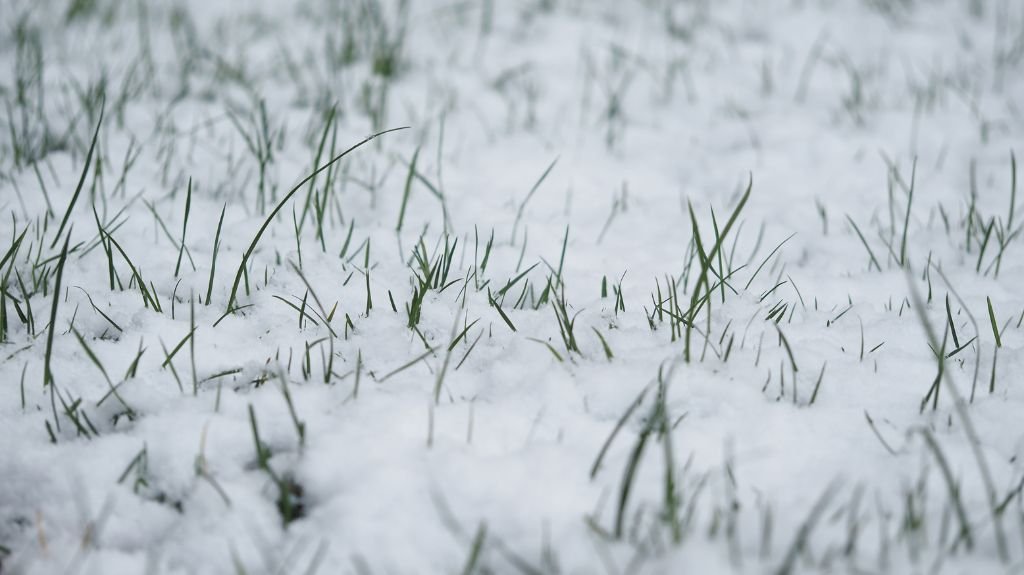
Yes, ice melt can kill grass, especially when repeated applications, salty runoff, or snow piles expose the same area all winter. The risk depends on the product, the amount used, and how water drains across your property.
Ice melt can stress grass roots, damage leaves, and leave thin or bare strips beside driveways and walkways. Rock salt is one possible cause, but plough damage, poor drainage, and other winter stresses can look similar.
Careful product use and snow placement can limit exposure without ignoring winter access. Here’s how to compare common de-icers, prevent lawn injury, check spring damage, and plan care in Fredericton.
Can Ice Melt Kill Grass, and How Does the Damage Happen?
Ice melt can kill grass when salts reach the root zone in high amounts or through repeated exposure, a pattern of winterkill of turfgrasses that extension researchers have documented on golf courses, lawns, and sports turf. Damage may appear as brown blades, thin growth, or bare patches beside pavement. A small amount may cause little visible harm, but the result depends on the product, soil drainage, weather, and grass condition. Salt can reach turf even when nobody spreads it directly over the lawn.
How Salts Stress Grass and Soil
Research on ice encasement and winter cover effects shows salt around the roots can make it harder for grass to take up water, even when the soil looks moist, a stress response documented in studies on annual bluegrass and creeping bentgrass putting greens. With enough exposure, salts may injure roots, crowns, and leaves, leaving grass brown or weak. Sodium can also affect soil structure and water movement. The risk varies with the soil, drainage, and amount of salt, so a single light exposure does not always cause visible damage.
How Runoff and Snow Piles Expose Turf
De-icer can reach grass through driveway runoff, salty slush, tracked granules, or snow pushed onto a lawn. When meltwater follows the same route or collects in a low spot, salt can build up in that area. Snow stored on turf may release salty water as it melts. Research on snow manipulation and overwintering disease in pasture grasses confirms that winter stress, compaction, and equipment damage can also cause thin or brown patches.
Which Ice Melt Products Pose the Greatest Risk to Grass?
Ice melt products differ in ingredients, but none should be treated as harmless to grass. Rock salt is widely used, while calcium chloride, magnesium chloride, and other products also contain salts that may injure turf. The risk depends on how much reaches the lawn and how often it happens. Check the label rather than relying on the product name or a general safety claim.
Comparing Common Ice Melt Ingredients
Sodium chloride, or rock salt, can harm grass if enough reaches the turf. Calcium chloride ice melt is still a salt and can injure plants when misused. Magnesium chloride can also stress grass after heavy or repeated exposure, consistent with findings on physiological responses of ryegrass genotypes to ice encasement, which show how turfgrass species vary in tolerance to salt and cold stress. Calcium magnesium acetate is a non-chloride option, but it is not automatically harmless.
| Ingredient | Lawn Risk | Practical Note |
|---|---|---|
| Sodium chloride | Can injure turf and affect soil | Commonly sold as rock salt |
| Calcium chloride | Can harm grass if misused | Check product directions |
| Magnesium chloride | Can stress grass after excess exposure | Keep it off turf |
| Calcium magnesium acetate | May have different effects | Follow the label |
Reading Product Labels and Safety Claims
Check the active ingredients, application directions, and temperature guidance before use. Claims such as “pet-safe” or “lawn-safe” do not guarantee that plants cannot be harmed. Do not apply extra product because ice remains or to replace snow clearing. The best ice melt for grass is not a blanket category; site conditions and label directions matter.
How Can You Prevent Ice Melt Damage to Grass in Winter?
You can reduce ice melt damage to grass by limiting how much product reaches the lawn. Clear loose snow first, keep de-icer on pavement, and plan where snow will be stored. These steps can help manage winter access while reducing exposure along lawn edges. The right approach depends on the surface, product, and property layout.
Clear Snow and Apply De-Icer Carefully
Remove as much loose snow as practical before treating a hard surface. Apply ice melt evenly on pavement, following the product label instead of scattering handfuls near grass. Sand can provide traction when melting is limited, but it does not melt ice. Sweep up excess when conditions allow so it does not collect in the lawn or drains.
Manage Snow Piles and Runoff
Choose snow-storage spots where melting snow will not drain across lawn edges or garden beds. If space is limited, rotate pile locations where practical rather than loading the same narrow strip each time. Check slopes, low spots, and drains for routes that carry water onto turf. Repeated snow storage, foot traffic, and equipment can also core aeration.
How Can You Identify and Repair Salt Damage in Spring?
Spring lawn damage may point to salt exposure, but brown grass alone cannot confirm the cause. Look at the patch’s location, winter history, and condition compared with nearby turf. A patchy lawn solutions may suggest runoff, while broader damage may have another cause. Wait for suitable spring growth before deciding whether the grass needs repair.
Check the Damage Pattern and Grass Condition
Look for narrow or irregular brown strips beside pavement or where snow was stored. Compare the area with nearby grass, and consider runoff, ploughing, compaction, snow mould, and drainage, since guidance on major winter injuries of cool-season turfgrass outlines how these overlapping causes can be told apart during spring assessment. Brown blades do not prove the grass is dead; living crowns may produce new growth. Wait until surrounding turf begins growing before judging the patch.
Support Recovery and Repair Bare Areas
Once the soil has thawed and drains normally, thorough watering may help move soluble salts through it. Do not flush frozen or saturated ground, or send runoff toward another vulnerable area. Wait until the ground feels firm before cleanup. If a screwdriver slides easily into the soil, it may still be too soft for cleanup. For recurring or extensive damage, consider soil testing and address runoff before reseeding or installing sod. Gypsum is not a general treatment for every salt problem.
How Should Fredericton Property Owners Plan Snow and Lawn Care?
Fredericton property owners can reduce lawn exposure by planning snow storage, de-icer use, and runoff routes before winter. Tell anyone clearing the property snow plow damage and where snow should go. Sand, mechanical snow clearing, and de-icing serve different purposes, so the right choice depends on site conditions. Atlantic Lawn & Snow offers snow clearing, ice management, sand application, spring cleanup, aeration, and overseeding. A local provider can discuss a plan for your property.
To close
Ice melt can damage or kill grass, but careful use and snow placement can reduce the risk. Keep products on pavement, avoid repeated salty snow piles on turf, and watch where meltwater flows. In spring, check the grass and possible causes before choosing a repair. Repeated bare spots may point to runoff or soil issues that overseeding grass.
Before winter, review where cleared snow and meltwater go on your property. Adjust the plan where needed, and ask a local lawn or snow provider about site-specific care.
FAQs
Can Road Salt Damage My Lawn If I Do Not Use Ice Melt?
Yes, road salt can reach nearby turf through spray or snow cleared from the road. Check whether the damaged area follows the road edge or a runoff path. plough damage, drainage, and other winter stresses can cause similar symptoms, so consider the location and winter history together.
Can Ice Melt Harm Trees and Shrubs Beside a Driveway?
Yes, salty runoff or stored snow can expose nearby trees and shrubs as well as grass. Keep treated slush away from planting beds where practical. The effects depend on the product, amount, drainage, and plant exposure, so follow the label and limit contact with vegetation.
Should I Apply Gypsum to a Lawn Exposed to Ice Melt?
Not automatically. Gypsum is not a general treatment for every type of salt damage, and its use depends on the soil and the problem. Consider a soil assessment before applying it, especially when damage is extensive or returns in the same spot.
How Can I Test Whether Salt Remains in My Lawn Soil?
A soil test can help investigate persistent or recurring lawn damage. Ask the testing provider which measurements suit your concern. Soil condition and drainage matter too, and salt may not be the only lawn care mistakes.
Can Ice Melt Affect Lawn Grass Through Pet Paws?
Yes, pets can carry granules or salty slush onto grass on their paws. Limit contact with treated areas when practical and follow the product label. A “pet-safe” claim does not mean the product cannot affect grass.