
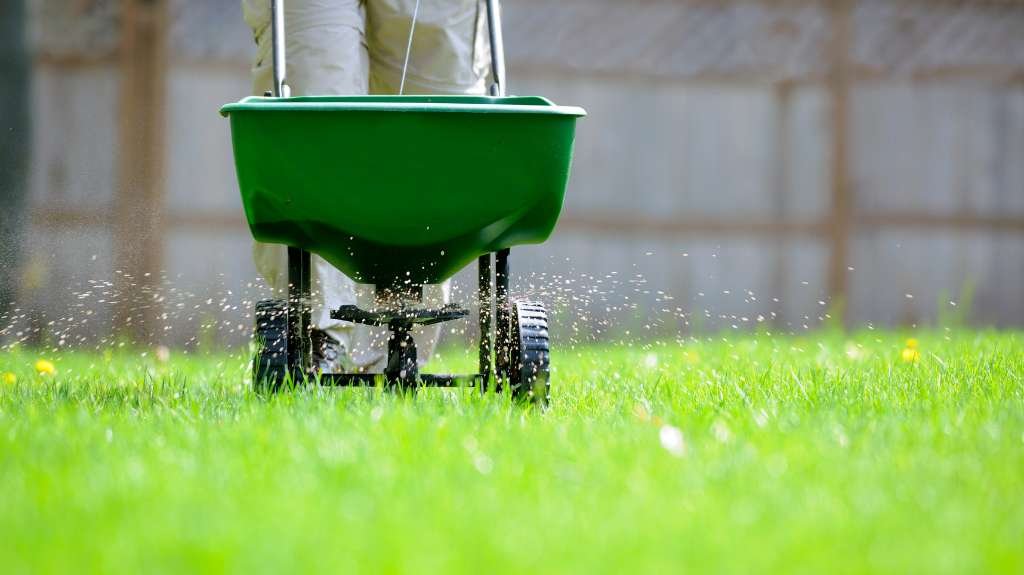
In Atlantic Canada, the lawn should receive its final fall fertilizer application between late October and mid November, after top growth has stopped but while the grass is still green and the soil is cool, not frozen. In this window, roots store nutrients for winter, which supports thicker turf and faster green up in spring. Use a quick release nitrogen and potassium rich winterizer fertilizer so nutrients move into the root zone before freeze up.
Does your lawn still look green but seem to have almost stopped growing? If you keep asking yourself When should the lawn receive its final fall fertilizer application?, you are not alone. Many Fredericton properties run into this timing puzzle every autumn.
This guide explains how to time that last feeding, choose a suitable winterizer blend, work with New Brunswick soils, avoid costly mistakes, and understand how a structured program carries your lawn through winter into spring.
What is the right timing for the final fall fertilizer application?
The right timing for the final fall fertilizer application in Fredericton is a short window after visible growth stops but before the soil freezes. In that period, cool season grasses still absorb nutrients and move them into roots instead of blades. Watching these growth signals answers the question of when the lawn should receive its final fall fertilizer application more accurately than any fixed calendar date.
Cool season grasses are species such as Kentucky bluegrass, perennial ryegrass, and creeping red fescue. They slow their leaf growth as days shorten and temperatures fall. They keep photosynthesizing, but energy shifts into carbohydrate storage below ground. According to University of Minnesota Extension, late summer and fall nitrogen feeding gives cool season lawns their strongest response because it lines up with this storage phase. That is why a well timed late fall treatment often shows up as very early green colour the next spring.
If fertilizer goes down too early in autumn, while the lawn still grows fast, the nitrogen pushes soft, lush top growth. Those tender blades use up stored sugars that should support roots. When hard frosts arrive, this new tissue suffers injury and the plant enters winter already stressed. Spring then brings thin, patchy turf that struggles to recover.
Apply too late and another problem appears. Once the soil freezes, roots stop taking in nutrients. Granules left on the surface sit idle until snowmelt. Heavy rain or a warm thaw can move leftover fertilizer into storm drains and the Saint John River. Research from Environment and Climate Change Canada links nutrient runoff to algae growth and low oxygen in water bodies, so timing protects both your lawn and local waterways.
How soil temperature and growth signals tell you when to act
Soil temperature and growth patterns answer When should the lawn receive its final fall fertilizer application? better than any date on the calendar. The goal is cool, not frozen, soil with grass that looks green but has nearly stopped growing.
Aim for soil in the 0 to 10 degree Celsius range at about five centimetres depth. Penn State Extension recommends fall fertilizing cool season turf once soil cools but remains unfrozen, which matches this range. If you do not own a soil thermometer, use a simple screwdriver test. When you can still push a screwdriver into the turf with some resistance, the ground is firm yet workable.
Growth cues help too. Watch for these signs.
- Mowing slows so that ten to fourteen days pass without needing to cut at your normal height.
- Most maple, oak, and birch trees in your yard have dropped their leaves.
- Grass blades remain green rather than straw brown, which shows that roots are still active enough to absorb a winterizer application.
Which fertilizer blend works best for Atlantic Canada’s cool-season grasses?
Winterizer fertilizer is a late season lawn product formulated to feed roots, not push fast leaf growth. The best fertilizer blend for Atlantic Canada’s cool season grasses uses quick release nitrogen, moderate to high potassium, and little or no phosphorus. This mix supports root storage in late fall instead of soft blades. Product choice ties directly into the timing of when the lawn should receive its final fall fertilizer application.
Nitrogen drives growth and colour. In cold New Brunswick soils, slow release nitrogen in many summer fertilizers barely breaks down because soil microbes are quiet. Research from the Guelph Turfgrass Institute notes that quick release sources such as urea are available to roots even in cool conditions. Late fall blends often carry ratios like 21 0 14 or 32 0 10, which give plenty of soluble nitrogen and a solid dose of potassium.
Here is how each nutrient works in late fall.
| Nutrient | Role in late fall | Recommended level |
|---|---|---|
| Nitrogen N | Fuels carbohydrate storage and supports early spring green up | High, quick release only |
| Phosphorus P | Helps new seedlings form roots | Low or none for established lawns |
| Potassium K | Strengthens cell walls and improves freeze thaw and disease tolerance | Moderate to high |
Potassium deserves special attention in Atlantic Canada. It supports thicker cell walls and better water balance inside each grass cell, which helps turf handle freeze thaw cycles and ice. According to University of Minnesota Extension, adequate potassium reduces some winter diseases in cool season lawns, including snow mould.
Phosphorus is usually not needed for established turf unless a soil test shows a shortage or you are growing new seed. Many Canadian municipalities limit phosphorus in lawn fertilizers to protect lakes from algae blooms, as explained by the Government of Ontario. Cool season grasses in New Brunswick store nitrogen as carbohydrates in crowns and roots, so a nitrogen and potassium focused winterizer blend directly supports winter survival and spring recovery.
How do New Brunswick’s soil conditions affect fall fertilizer results?
New Brunswick soil conditions have a strong effect on how well that last fertilizer before winter works. Even if you apply at the perfect moment, acidic and compacted soil can block nutrients from reaching grass roots. For many Fredericton properties, soil health shapes the real answer to When should the lawn receive its final fall fertilizer application?
Much of the province sits on podzolic soil, often acidic and low in natural lime. Agriculture and Agri Food Canada notes that podzolic soils commonly test below pH 5.5 in forested parts of Atlantic Canada. At that level, nutrients such as nitrogen and potassium bind to soil particles and become less available to turf. The ideal pH range for cool season grasses is roughly 6.0 to 7.0, according to the University of Guelph. Bringing soil into that range helps every fertilizer dollar count.
Heavy clay is another concern. Many Fredericton lawns and commercial sites sit on dense clay that compacts under foot and vehicle traffic. Compacted soil has few air pockets, so water and nutrients cannot move easily down to root depth. Root systems stay shallow and weak, which limits how much late fall nitrogen they can store for winter. Core aeration before the winterizer pass opens channels so granules and water can move into the root zone.
To prepare New Brunswick soil before a winterizer treatment, follow these steps.
- Step 1 Test soil pH
Use a home test kit or local lab in early to mid October. If your reading sits below 6.0, apply agricultural lime based on package or lab recommendations. Adjusting pH takes time, so earlier in fall works best. - Step 2 Core aerate compacted areas
Rent an aerator or hire a service to pull cores from lawns built on clay. Focus on drive entries, play areas, and commercial walkways. Fresh channels help air and nutrients reach deeper roots ahead of winter. - Step 3 Clear leaf litter
Remove or mulch layers of maple, oak, and birch leaves before fertilizing. A thick leaf mat blocks granules from touching soil. Lightly shredded leaves are fine because they break down and add organic matter. - Step 4 Calibrate your spreader
Check the spreader chart on the fertilizer bag and test on a driveway or tarp. Even coverage prevents stripes and burnt patches. Steady walking speed matters as much as the setting. - Step 5 Water lightly after application
If no gentle rain arrives within a day or two, run sprinklers briefly. Light watering dissolves quick release nitrogen and moves it into the top few centimetres of soil. Deep soaking is not needed at this time of year.
What mistakes most damage lawns during the final fall fertilizer window?
Several common mistakes can undo the benefits of late fall feeding and make lawns weaker going into winter. These errors relate to timing, product choice, and basic cleanup. They often appear when people rush through the last yard tasks while wondering When should the lawn receive its final fall fertilizer application?
Applying too early is the most frequent problem. A warm spell in late September or early October tempts many owners to spread a winterizer while the lawn still grows fast. That schedule fits a regular fall feeding, not a true final application before winter. On the other side, some owners wait until snow is in the forecast and the soil has already frozen, which wastes fertilizer and risks runoff.
Using leftover summer fertilizer also causes trouble. Those products often carry high slow release nitrogen that needs warm soil to break down. When temperatures fall, the coating stays intact and very little nitrogen reaches the plant. Ignoring thick layers of leaves has a similar effect because granules never hit bare soil.
Here is a quick list of mistakes to avoid.
- Applying too early
Spreading winterizer during a warm late September or early October spell pushes lush top growth. Frost then damages that soft tissue. The plant spends winter with fewer stored sugars, so spring green up is weak and patchy. - Applying to frozen ground
Once the soil freezes, roots stop absorbing nutrients. Granules left on ice or hard soil wash off during the next thaw or heavy rain. Many Canadian regions restrict fertilizing on frozen ground to protect streams and lakes. - Using slow release summer blends
Summer lawn food relies on soil microbes to release nitrogen slowly. Cold late fall soil shuts those microbes down. The result is almost no winterizing benefit from an application that looked correct on paper. - Fertilizing under leaf layers
A thick blanket of leaves catches most fertilizer granules before they reach the soil. Those granules sit on the leaves and can even stick to wet piles. Proper raking or mulching before the final pass is not optional for good results. - Skipping the pH check
In New Brunswick’s naturally acidic soils, skipping pH testing means you may spread fertilizer that roots cannot use. Even a basic test kit alerts you if lime is needed. Correcting pH multiplies the value of every future treatment.
How Atlantic Lawn and Snow supports your lawn through fall and into winter
Atlantic Lawn and Snow bases its fall program on local soil and climate, not generic national schedules. The team uses soil temperature, grass growth, and regional weather patterns around Fredericton to decide exactly when the lawn should receive its final fall fertilizer application on each property. This approach reduces guesswork for busy owners and managers.
A structured program usually includes pH testing every few years, lime where needed, and core aeration on compacted clay sites before the winterizer pass. Staff then clear heavy leaf cover so fertilizer touches soil, and they use calibrated equipment to spread quick release nitrogen and potassium blends at correct rates. According to Agriculture and Agri Food Canada, managing soil pH and compaction together supports deeper roots and stronger turf. The same crew shifts into snow and ice care once storms arrive, so lawns and access areas are managed as a single system through the full New Brunswick winter.
Key takeaways
- The best window in Atlantic Canada is late October to mid November. Apply after the last regular mow, while grass still shows a healthy green colour.
- Soil responds best once it cools below about 10 degrees Celsius without freezing. Aim for cool nights and mild days. Use growth slowdown and leaf drop as backup guides.
- Late fall fertilizer should rely on quick release nitrogen with moderate to high potassium. Ratios such as 21 0 14 or 32 0 10 are common. Check and correct acidic New Brunswick soils so nutrients reach the roots.
Tip: Wait until you have gone 10 to 14 days without mowing, yet the lawn still looks green, before spreading the final fall fertilizer.
FAQ’s
How late can you fertilize your lawn in Canada?
You can usually fertilize until mid November in many Canadian regions, as long as soil is not frozen. In Atlantic Canada, stop once soil temperatures sit below freezing most days. Applying after the freeze period adds almost no benefit and may conflict with local environmental rules.
Is October too early for a winterizer fertilizer application?
Early to mid October is normally too early in Fredericton for a true winterizer. Wait until you go ten to fourteen days without mowing and blades still look green. At that point, the answer to When should the lawn receive its final fall fertilizer application? is often late October or early November.
Can you use regular lawn fertilizer instead of a winterizer?
You can use regular fertilizer, but it rarely works well as a winterizer. Standard summer products rely on slow release nitrogen, which needs warm soil to activate. By late fall, cool soil leaves most of that nitrogen locked in the coating, so roots gain little stored food for winter.
Should you water the lawn after applying fall fertilizer?
Yes, a light watering within a day or two helps. Moisture dissolves quick release granules and pulls nutrients into the top few centimetres of soil. Avoid applying just before a heavy rainstorm, because strong runoff can carry fertilizer away from the lawn and into drains.
Does core aeration need to happen before the final fall fertilizer application?
Core aeration is strongly recommended before the last fall application on New Brunswick’s clay soils. Removing plugs opens the soil so fertilizer, water, and air can reach deep roots. Aerate in early to mid fall, then apply the winterizer during the late October to mid November window.