
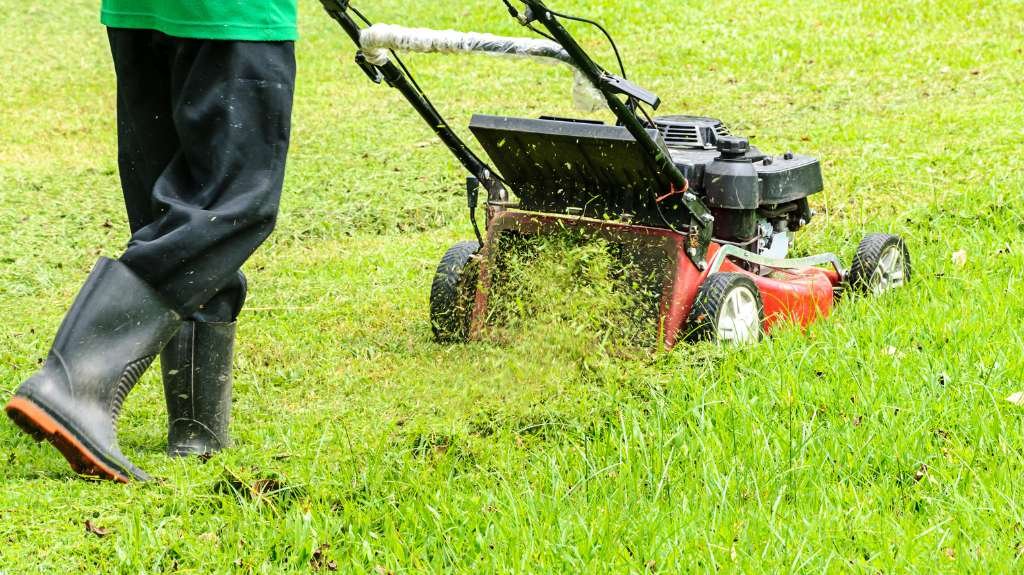
Have you just invested in professional aeration and overseeding for your Fredericton lawn, only to find yourself staring anxiously at the new grass, wondering when it’s safe to bring out the mower? You’re not alone in this worry. Timing that first cut incorrectly can undo weeks of careful watering and patience, pulling fragile seedlings right out of the ground before their roots have anchored.
In Atlantic Canada’s unpredictable climate, where a late frost can arrive without warning and clay-heavy soils behave differently than elsewhere in the country, the window for successful lawn recovery is narrow. The answer isn’t found on a calendar. Instead, it’s a biological milestone: your new grass must reach 3 to 3.5 inches in height before the mower touches it, typically 14 to 21 days after overseeding.
This article walks you through the exact height thresholds, equipment adjustments, and post-mowing care strategies that protect your investment and deliver the thick, resilient turf you’re working toward.
When is the right time to mow after aeration and overseeding?
The first mow after overseeding is determined by grass height, not calendar days. Your new seedlings must reach 3 to 3.5 inches before you cut, which typically occurs 14 to 21 days after overseeding. This height threshold ensures the roots have anchored deeply enough to withstand the weight and suction of a mower.
Mowing too early is one of the most common reasons overseeding projects fail in Fredericton. When you run a mower over newly seeded areas before roots have established, several destructive forces come into play:
- The weight of the mower compresses the soil, crushing delicate root systems that are still shallow
- The blade suction pulls young plants upward, often ripping them completely out of the ground
- In Atlantic Canada’s clay-heavy soils, where root penetration is already challenging, this premature stress can be fatal to seedlings
The tug test is your most reliable readiness indicator. Gently pull on a few blades of new grass in different areas of the lawn. If you feel resistance and the grass stays rooted, the seedlings are ready. If the blades pull out easily, wait another few days and test again.
One challenge homeowners face is that existing mature grass grows much faster than new seedlings. Your established turf may look overgrown and unkempt after 10 days, tempting you to mow. Resist this urge. The taller existing grass provides a protective canopy for the young sprouts, shielding them from excessive direct sunlight and helping the soil retain moisture during germination.
Visual and physical readiness checklist
- New grass blades are 3 to 3.5 inches tall when measured from soil level
- The tug test shows strong root resistance across multiple lawn areas
- Soil is firm when you walk on it (no visible footprints or soft spots)
- New grass blades have a vibrant green colour, not the pale yellow of early germination
Fredericton’s clay soils and fluctuating spring moisture levels mean root development speed varies from property to property. A lawn in full sun with well-draining topsoil may be ready in 14 days, while a shaded area with heavy clay may need the full three weeks. Monitor height and root strength rather than following a rigid timeline.
How to prepare your mower and execute the first cut safely
Equipment preparation for the first post-overseeding mow is non-negotiable. Professionally sharpened blades are the single most important factor in protecting young grass. Dull blades tear and rip the grass rather than cutting it cleanly. For mature turf, this creates ragged edges that turn brown. For new seedlings with shallow roots, a dull blade pulls the entire plant out of the soil, destroying weeks of establishment progress.
Set your mower deck to its highest setting, maintaining a grass height of 3 inches after cutting. High-cut grass promotes deeper root growth by forcing the plant to seek moisture and nutrients further into the soil. The increased blade surface area also supports more photosynthesis, helping the plant build carbohydrate reserves before winter dormancy.
The one-third rule must be strictly followed. Never remove more than one-third of the total grass blade length in a single session. If your grass has grown to 4 inches while waiting for seedlings to mature, only cut it down to approximately 2.7 inches. Removing more than one-third shocks the plant, forcing it to divert energy from root development to blade repair. For a newly overseeded lawn, this stress can halt establishment entirely.
Mowing conditions and timing
- Only mow when soil is completely dry. Press your thumb into the soil; if it leaves an indentation or feels spongy, wait 24 to 48 hours
- Never mow after rain or morning watering sessions. Wet grass clumps in the mower deck and cuts unevenly
- Avoid mowing during the hottest part of the day. Early evening is ideal when grass blades are dry but temperatures are moderate
- Walk the lawn before mowing to check for soft spots or areas where the soil feels unstable
For the first cut, use the side-discharge or mulching setting rather than bagging clippings. The clippings are rich in nitrogen and will decompose quickly, returning nutrients to the soil. However, if the grass was excessively long and creates thick clumps, you must rake them out or bag them to prevent smothering the young seedlings underneath.
Mowing pattern variation is critical for newly overseeded areas. Do not mow in the same direction every time. New seedlings are easily pushed over and compressed. Alternate your pattern each session (north-south one week, east-west the next) to ensure grass grows upright and to avoid creating ruts in the aerated soil.
Equipment and technique checklist
- Blades sharpened professionally within the past two weeks
- Mower deck set to highest position (3-inch cutting height minimum)
- Tire pressure checked to prevent soil compaction
- Mower underside cleaned to remove old debris and prevent fungal spread
- Slow, steady walking pace with no sharp turns or sudden stops
In Fredericton’s climate, where heavy spring rains are common, soil firmness is often the limiting factor. Even if grass height is correct, mowing on saturated soil compacts the very aeration holes you paid to create, undoing the compaction relief and suffocating new roots.
What care does your lawn need after the first mow?
The first mow marks a critical transition from the germination phase to the establishment phase. Your watering strategy must shift immediately. Before the first cut, you likely watered 1 to 2 times daily in short bursts to keep the top inch of soil moist for germination. After the first mow, transition to deep, infrequent watering with a target of 1 to 1.5 inches of water per week, delivered in two heavy sessions.
Deep watering encourages roots to grow downward into the aeration holes in search of moisture. Shallow, frequent watering keeps roots near the surface, making the lawn vulnerable to drought stress and winter damage. In Atlantic Canada’s clay soils, deep watering also helps break up compaction layers below the aeration depth, creating a more hospitable root environment.
Traffic limitations must continue for at least 6 to 8 weeks after overseeding, even though the lawn may appear fully established after the first mow. The visible grass blades are only part of the picture. Below the surface, the root system is still developing and vulnerable to compression. Heavy foot traffic from pets, children, or repeated walking paths can compact the soil and damage the crowns of new grass plants, creating thin spots that persist through the season.
Fertilization and weed control timing is where many homeowners make costly mistakes. Never apply weed control products or weed-and-feed fertilizers for at least 6 to 8 weeks after overseeding. Pre-emergent herbicides and broadleaf weed killers are designed to prevent seed germination. These chemicals cannot distinguish between a dandelion seed and a new grass seedling. Applying them too early will kill your new grass along with the weeds.
If a starter fertilizer (high in phosphorus) was not applied during the aeration and overseeding process, wait until after the second or third mow to apply a balanced, slow-release fertilizer. This timing allows the seedlings to establish a basic root structure capable of absorbing nutrients efficiently. Over-fertilizing young grass forces rapid top growth at the expense of root development, creating weak turf that struggles through winter.
Seasonal considerations for Fredericton
- Fall overseeding: If you overseeded in late August or early September, your first mow likely occurs in late September. The cooling evening temperatures help soil retain moisture, supporting strong root growth. Your final mow of the season (before snow arrives) should gradually reduce grass height to 2 to 2.5 inches to prevent snow mould, but only after the new grass has been mowed at least three times at the higher 3-inch setting
- Spring overseeding: Spring overseeding in Fredericton faces the challenge of rapid existing grass growth due to high nitrogen levels and frequent rain. You may need to mow the established grass before new seedlings are fully ready. In this scenario, use a lightweight push mower rather than a heavy riding mower to minimize soil compaction impact
How Atlantic Lawn and Snow can help with post-aeration care
Atlantic Lawn and Snow brings over 15 years of experience managing the complete post-overseeding timeline in Fredericton’s specific soil and weather conditions. Our team understands that successful lawn recovery depends on coordinated timing across multiple services: proper aeration depth, climate-appropriate seed blends, sharpened mower blades, and fertilization timing all working together.
Our structured seasonal programs integrate aeration, overseeding, mowing schedules, and fertilization into a single managed plan. You don’t need to track when to mow, when to fertilize, or when it’s safe to apply weed control. We handle the timing based on actual local weather patterns and soil temperature conditions, not arbitrary calendar dates.
For commercial property managers and new residents unfamiliar with Atlantic Canada’s clay-heavy soils and cool-season grass requirements, our programs provide the professional oversight that protects your investment and delivers consistent results season after season.
Contact Atlantic Lawn and Snow for overseeding consultations and post-aeration care plans:
FAQ’s about lawn mowing after aeration and overseeding
Can I walk on my lawn before the first mow after overseeding?
Light foot traffic for inspection is acceptable, but avoid repeated walking paths or heavy activity until after the first mow. The tug test requires minimal contact, but daily walking compresses soil and damages shallow roots. Limit pet access and children’s play to established lawn areas for at least three weeks after overseeding.
What happens if it rains heavily right before I planned to mow?
Wait 24 to 48 hours after heavy rain before mowing to allow soil to firm up. Mowing on saturated soil compacts the aeration holes you just created and undoes the compaction relief. Wet grass also clumps in the mower deck rather than cutting cleanly, leaving uneven patches across the lawn.
Should I use a riding mower or push mower for the first cut?
Lightweight push mowers or reel mowers are ideal for small residential lots because they minimize soil compaction. Riding mowers are acceptable if the soil is completely dry and you move slowly with no sharp turns. The concentrated weight of a riding mower on wet or soft soil can crush young root systems.
How many times should I mow before applying weed control?
Mow at least 3 to 4 times before applying any herbicide products. Pre-emergent and weed-and-feed products cannot distinguish between weed seeds and grass seeds. Applying them too early kills new grass along with weeds. Wait a minimum of 6 to 8 weeks after overseeding before any chemical weed treatment.
Can I fertilize immediately after the first mow?
If starter fertilizer was applied during overseeding, no additional fertilizer is needed until after the second or third mow. Over-fertilizing young grass forces rapid blade growth at the expense of root development. In Atlantic Canada’s commonly acidic soils, soil pH testing is recommended to ensure nutrients are actually available to the grass rather than locked away by soil chemistry.